


Hey there! As a supplier of straight pipes, I've often been asked about the flow rate in a straight pipe. So, I thought I'd take a moment to break it down for you in a way that's easy to understand.
First things first, let's talk about what flow rate actually means. In simple terms, flow rate is the volume of fluid (like gas or liquid) that passes through a given point in a pipe per unit of time. It's usually measured in units like cubic meters per second (m³/s) or gallons per minute (GPM).
Now, when it comes to straight pipes, there are a few key factors that affect the flow rate. One of the most important ones is the diameter of the pipe. You see, a wider pipe generally allows for a higher flow rate because there's more space for the fluid to move through. Think of it like a highway - a wider highway can handle more cars at once, right? Similarly, a larger - diameter straight pipe can handle a greater volume of fluid.
Another factor is the length of the pipe. The longer the pipe, the more resistance the fluid will encounter as it moves through. This resistance, known as frictional resistance, slows down the fluid and reduces the flow rate. It's like running a long - distance race; the farther you have to run, the more tired you get, and the slower you go.
The viscosity of the fluid also plays a role. Viscosity is a measure of a fluid's resistance to flow. For example, honey is more viscous than water. A more viscous fluid will flow more slowly through a straight pipe compared to a less viscous one. So, if you're dealing with a thick, syrupy liquid, you can expect a lower flow rate than if you're using a thin, watery fluid.
The roughness of the pipe's inner surface is yet another factor. A rough - surfaced pipe creates more friction for the fluid flowing through it, which in turn reduces the flow rate. On the other hand, a smooth - surfaced pipe allows the fluid to glide through more easily, resulting in a higher flow rate.
Let's talk about some real - world applications. In the automotive industry, straight pipes are commonly used in exhaust systems. A proper flow rate in the exhaust pipe is crucial for the engine's performance. If the flow rate is too low, it can cause back - pressure, which means the exhaust gases can't escape the engine efficiently. This can lead to reduced power output and lower fuel efficiency. That's why choosing the right size and type of straight pipe is so important.
At our company, we offer a wide range of straight pipes to meet different needs. For instance, we have Titanium Round Tubing. Titanium is a great material for exhaust pipes because it's lightweight, strong, and resistant to corrosion. These round tubes are designed to provide an optimal flow rate, ensuring that your exhaust gases can flow smoothly out of the engine.
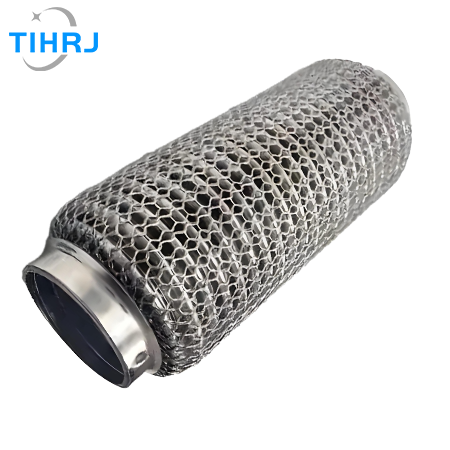
We also have Car Exhaust Flexible Pipes. These flexible pipes are useful in situations where there might be some movement or vibration in the exhaust system. They can bend and flex without restricting the flow rate, making them a great choice for a variety of automotive applications.
And for those looking for a more budget - friendly option, we have Stainless Steel Car Flexible Pipe. Stainless steel is durable and offers a good balance between cost and performance. It can maintain a decent flow rate while being resistant to rust and other forms of damage.
To calculate the flow rate in a straight pipe, we can use some formulas. One of the most common ones is the Darcy - Weisbach equation. This equation takes into account the pipe's length, diameter, friction factor, and the velocity of the fluid. It's a bit complex, but there are also online calculators available that can do the work for you. Just input the relevant parameters, and you'll get an estimate of the flow rate.
However, it's important to note that these calculations are based on ideal conditions. In real - life situations, there might be other factors at play, such as bends in the pipe, changes in temperature, and the presence of valves or other fittings. These can all affect the flow rate and make the actual flow rate different from the calculated one.
So, why should you choose our straight pipes? Well, we've been in the business for a while, and we know what it takes to provide high - quality products. Our pipes are made from top - notch materials and are manufactured to strict standards. We ensure that the inner surfaces are as smooth as possible to minimize frictional resistance and maximize the flow rate.
Whether you're a car enthusiast looking to upgrade your exhaust system or a professional in the automotive industry, we've got the right straight pipes for you. And if you're not sure which one is the best fit for your needs, our team of experts is here to help. We can answer all your questions and guide you through the selection process.
If you're interested in learning more about our straight pipes or want to place an order, don't hesitate to get in touch. We're always happy to have a chat and discuss how we can meet your requirements. Whether it's about the flow rate, the material, or the size of the pipe, we're here to provide you with all the information you need. So, let's start a conversation and see how we can work together to get you the perfect straight pipes for your project.

References
- Fluid Mechanics textbooks, various editions
- Automotive exhaust system design guides
- Industry reports on pipe manufacturing and fluid flow in pipes



