Your Professional Bungs Supplier
Baoji Hairuijie Metal Co., Ltd. is a leading supplier specializing in titanium exhaust pipe components, offering a wide range of models. Our clientele consists primarily of automotive modification enthusiasts from around the globe.
Standardized Production
We are capable of manufacturing and supplying products in compliance with international standards, including GB, ASTM, CEFR, GOST, and others.
Quality Certification
Baoji Hairuijie Metal Co., Ltd. has obtained ISO 9001 quality management system certification. We maintain a rigorous quality control and testing framework to ensure product excellence.
Custom Service
We offer tailored solutions to meet specific customer requirements.
Sales Market
Our products are exported to countries across Europe, America, Australia, Russia, Japan, Korea, and other regions worldwide.
-
![O2 Sensor Plug]() O2 Sensor PlugProduct Introduction:Product Name: M12x1.25 O2 Sensor PlugMaterial: Titanium Gr2Surface: PolishedBrand:Ti-HRJOrigin: Shaanxi, ChinaCar Model: AllThread: M12x1.25Sample: AvailableBend Radius: NaturalQuantity: Single Bungread more
O2 Sensor PlugProduct Introduction:Product Name: M12x1.25 O2 Sensor PlugMaterial: Titanium Gr2Surface: PolishedBrand:Ti-HRJOrigin: Shaanxi, ChinaCar Model: AllThread: M12x1.25Sample: AvailableBend Radius: NaturalQuantity: Single Bungread more -
![NPT Female Weld Bung]() NPT Female Weld BungProduct Name: NPT Female Weld BungMaterial: Titanium Gr2 Gr5Technics: CNC machinedBrand:Ti-HRJOrigin: Shaanxi, ChinaCar Model: UniversalThread: 1/8'' 3/8''Sample: AvailableApplications: Automobile and motorcycleQuantity: Single Bungread more
NPT Female Weld BungProduct Name: NPT Female Weld BungMaterial: Titanium Gr2 Gr5Technics: CNC machinedBrand:Ti-HRJOrigin: Shaanxi, ChinaCar Model: UniversalThread: 1/8'' 3/8''Sample: AvailableApplications: Automobile and motorcycleQuantity: Single Bungread more -
![AN Bung]()
-
![NPT Bung]()
-
![Oxygen Bung]() Oxygen BungProduct Name: Oxygen bung Material: Titanium Gr2 Surface: PolishedBrand:Ti-HRJOrigin: Shaanxi, ChinaCar Model: AllThread: M18x1.5Sample: AvailableBend Radius: NaturalQuantity: Single Bungread more
Oxygen BungProduct Name: Oxygen bung Material: Titanium Gr2 Surface: PolishedBrand:Ti-HRJOrigin: Shaanxi, ChinaCar Model: AllThread: M18x1.5Sample: AvailableBend Radius: NaturalQuantity: Single Bungread more


Specification
|
Material |
Titanium Gr2 |
|
Surface |
Polished |
|
Brand |
Ti-HRJ |
|
Origin |
Shaanxi, China |
|
Car Model |
All |
|
Thread |
M12x1.25 |
|
Sample |
Available |
|
Bend Radius |
Natural |
|
Quantity |
Single Bung |
Types of Bungs
The titanium bungs produced by our company mainly include the following types:
NPT Female Weld Bung
In the complex world of automotive engineering, the exhaust system is the breathing passage of the engine, and NPT female weld fittings are the most critical connection hub in this system.
NPT Bung
Precision CNC machined from High Grade Commercially Pure Grade 2 Titanium, the bung offers excellent strength and corrosion resistance, guaranteeing long-lasting performance. Coped end for gapless fitment against tubing.
Oxygen Bung
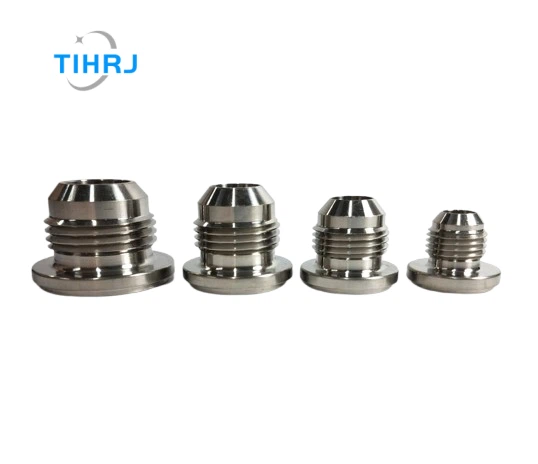
These plugs are designed to fit oxygen sensors with a thread pitch of 18mm x 1.5. The Universal Oxygen Sensor Plug is made of high quality titanium and is easy to weld onto your exhaust system.

● Sealing the Exhaust Leak: It plugs the hole, preventing exhaust gases from escaping under pressure.
● Protecting the Bung Threads: It shields the vital threads from physical damage and contamination.
● Preventing Dirt and Moisture Entry: It creates a barrier against external elements entering the exhaust system.
Oxygen Sensor Plugs Thread Pattern
Tapered (NPT/NPTF)
National Pipe Thread Tapered / Dryseal Tapered. As the plug is tightened, the threads wedge together, creating a mechanical seal.
Straight (Parallel) Threads
Less common for bungs, but exist. These require a sealing washer (metal or composite) to create a seal, as the threads themselves don't compress.
Installation Steps of Oxygen Sensor Plugs
Preparation
● Safety First: Park on a level surface, use wheel chocks, engage the parking brake. Work in a well-ventilated area. Allow the exhaust system to cool completely before starting.
● Cleaning: Thoroughly clean the bung threads. Use a wire brush designed for threads (like a brass brush) to remove rust, carbon, debris, or old thread locker/sealant. Spraying brake cleaner on a rag and wiping the threads can help dissolve grease.
● Verify Fitment: Before applying any compound, gently thread the new plug into the clean bung by hand to ensure it starts smoothly and the threads match. Do not force it. If it doesn't thread easily, double-check the thread size.
Lubrication & Sealing (Critical Step)
● For Tapered (NPT) Threads: Apply a small amount of high-temperature anti-seize compound (specifically formulated for exhaust systems) to the male threads of the plug. Alternatively, use a high-temperature PTFE thread sealant paste.
● For Parallel Threads w/ Washer: Apply anti-seize only to the threads if desired (but not essential). Focus on ensuring the sealing washer is in place. Do not put sealant on the washer face unless the plug manufacturer specifically instructs it.
Threading the Plug
Start by Hand! Carefully align the plug with the bung and thread it in clockwise by hand only for the first several turns. This is crucial to avoid cross-threading. Stop immediately if you feel significant resistance.
Tightening
● Hand Tight Plus 1/4-1/2 Turn: Once fully hand-tight, use an appropriate wrench (open-end or socket) to gently tighten the plug. The goal is snug and secure, not excessively tight.
● Specific Torque: If available, use the torque specification recommended by the plug manufacturer (often quite low, like 10-20 ft-lbs). If specs aren't available, tighten firmly by hand with the wrench until resistance is felt, then give only one-quarter to one-half turn more.
● Avoid: Do not overtighten. Tapered threads (NPT) gain sealing force as they wedge deeper, not just from high torque.
● Visual Inspection: Check for any obvious gaps. Start the engine (with adequate ventilation) and carefully listen for any hissing sounds near the plug and feel around it (avoid touching the hot exhaust!) for escaping gases. A small puff of smoke when first started might be residual sealant burning off.
Ordering Process
Send an inquiry to us.
We will communicate with you the detailed requirements.
An official proof of order will be sent to you to confirm the order.
You should pay the deposit before production.
We will start production after receiving your payment.
We will keep you updated throughout the production process.
We will send you a photo before delivery.
The balance shall be paid before shipment.
Photos, tracking numbers, all related documents will also be updated with you.
Packaging and Shipping
|
Packaging |
Wooden Packages |
|
Shipping |
DHL/FEDEX/UPS |
Our Factory
The company was established in 2017 and is located in Baoji City, Shaanxi Province, which is known as "China's Titanium Valley".

FAQ
We're professional bungs manufacturers and suppliers in China, specialized in providing high quality customized service. We warmly welcome you to buy bungs for sale here from our factory. Contact us for quotation.
NPT Bung, bungs, AN Bung-
![Titanium Flexible Exhaust Connector]() Titanium Flexible Exhaust ConnectorProduct Name:Titanium Flexible Exhaust ConnectorSize:2.0,2.5,3.0,3.5 inch,CustomizedKey Words:GR2 Titanium Flexread more
Titanium Flexible Exhaust ConnectorProduct Name:Titanium Flexible Exhaust ConnectorSize:2.0,2.5,3.0,3.5 inch,CustomizedKey Words:GR2 Titanium Flexread more -
![Titanium Straight Pipe]() Titanium Straight PipeWall thickness:1.0mm/1.2mmLength:1000~12000mm(normal size)Technique: Cold RolledBrand Name:TIHRJModel Number:read more
Titanium Straight PipeWall thickness:1.0mm/1.2mmLength:1000~12000mm(normal size)Technique: Cold RolledBrand Name:TIHRJModel Number:read more -
![Titanium Exhaust Elbow]() Titanium Exhaust ElbowProduct Name:Titanium exhaust elbowGrade:GR2 Titanium MaterialSpecification:2.0 inch /2.5 inch/3.0 inchModelread more
Titanium Exhaust ElbowProduct Name:Titanium exhaust elbowGrade:GR2 Titanium MaterialSpecification:2.0 inch /2.5 inch/3.0 inchModelread more -
![Titanium Block]() Titanium BlockProduct Name:Titanium BlockBrand Name:TIHRJStandard: ASTM B381/AMS 4928Application:Chemical Industry/Medicalread more
Titanium BlockProduct Name:Titanium BlockBrand Name:TIHRJStandard: ASTM B381/AMS 4928Application:Chemical Industry/Medicalread more -
![Titanium Exhaust Pie Cuts]() Titanium Exhaust Pie CutsProduct Name:Titanium Exhaust Pie CutsGrade: GR2 TitaniumSpecification:CustomizedBrandread more
Titanium Exhaust Pie CutsProduct Name:Titanium Exhaust Pie CutsGrade: GR2 TitaniumSpecification:CustomizedBrandread more -
![Gr2 Automobile Polishing Titanium Exhaust Elbow]() Gr2 Automobile Polishing Titanium Exhaust ElbowStandards Material: ASTM B338 (Titanium Seamless Tube) / ASTM B363 (Titanium Pipe Fittings –read more
Gr2 Automobile Polishing Titanium Exhaust ElbowStandards Material: ASTM B338 (Titanium Seamless Tube) / ASTM B363 (Titanium Pipe Fittings –read more