Hey there! As a perforated rubber supplier, I often get asked about the wear - resistance of perforated rubber. So, let's dive right into it and explore what this property really means and why it matters.
What is Wear - Resistance?
First things first, wear - resistance is all about how well a material can stand up to the forces that cause it to wear away over time. When we talk about perforated rubber, these forces can come from a bunch of different sources. It could be friction from rubbing against other surfaces, abrasion from particles like sand or dirt, or even the repeated impact of objects.
Think of it like this: If you've got a perforated rubber gasket in a machine, it's going to be constantly in contact with other parts. Every time the machine runs, there's going to be some kind of movement, and that movement creates friction. Over time, if the rubber isn't wear - resistant, it'll start to break down, get torn, or lose its shape. And once that happens, the gasket won't work as well, and it might even lead to bigger problems with the machine.
Factors Affecting the Wear - Resistance of Perforated Rubber
Now, there are several factors that can influence how wear - resistant perforated rubber is.
Rubber Type
The type of rubber used is a huge factor. Different rubbers have different inherent properties. For example, natural rubber is known for its high elasticity, but it might not be as wear - resistant as some synthetic rubbers. On the other hand, materials like nitrile rubber (NBR) are often used in applications where wear - resistance is crucial because they can withstand a lot of friction and abrasion.
Perforation Design
The way the holes are designed in the perforated rubber also matters. If the holes are too large or too close together, it can weaken the structure of the rubber and make it more prone to wear. A well - designed perforation pattern distributes the stress evenly across the rubber, which helps it maintain its integrity over time.
Additives
Manufacturers can add various additives to the rubber to improve its wear - resistance. For instance, carbon black is a common additive that can enhance the strength and durability of the rubber. It acts like a reinforcement, making the rubber more resistant to abrasion.
Testing the Wear - Resistance of Perforated Rubber
So, how do we know if a particular perforated rubber product is wear - resistant? Well, there are a few standard tests that are commonly used.
One of the most well - known tests is the Taber Abrasion Test. In this test, a sample of the perforated rubber is placed on a rotating platform, and a weighted abrasive wheel is pressed against it. The wheel rotates, and as it does, it abrades the rubber surface. After a set number of rotations, the amount of material that has been worn away is measured. The less material that's lost, the more wear - resistant the rubber is.
Another test is the DIN Abrasion Test. This test is similar in concept to the Taber test, but it uses a different type of abrasive and a different testing setup. It's also a widely recognized way to evaluate the wear - resistance of rubber materials.
Applications of Wear - Resistant Perforated Rubber
Wear - resistant perforated rubber has a wide range of applications.
Sealing
In the automotive industry, wear - resistant perforated rubber gaskets are used to seal different components. For example, they can be used to seal the engine block to prevent leaks. The wear - resistance ensures that the gasket lasts a long time, even under the harsh conditions of an engine compartment.
Filtration
Perforated rubber can also be used in filtration systems. The holes in the rubber allow fluids or gases to pass through, while the wear - resistant nature of the rubber ensures that it doesn't break down easily when exposed to the flow of the medium being filtered.
Conveyor Belts
In industrial settings, wear - resistant perforated rubber is used in conveyor belts. These belts are constantly moving and carrying heavy loads, so they need to be able to withstand a lot of wear and tear. The perforations can also serve a purpose, such as allowing air to escape or facilitating the movement of certain types of products.
Comparing Perforated Rubber with Other Perforated Materials
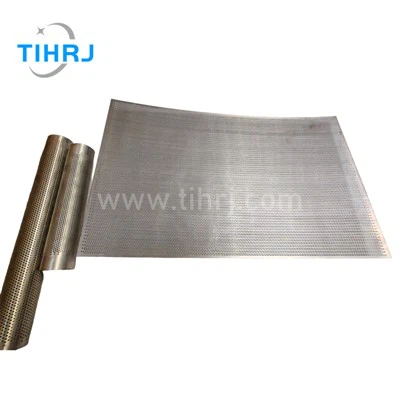
It's also interesting to compare perforated rubber with other perforated materials, like Titanium Perforated Plate and Titanium Perforated Tube.


Titanium is a very strong and durable material. Perforated titanium plates and tubes are often used in high - performance applications, such as aerospace or automotive exhaust systems. They can withstand high temperatures and corrosive environments better than rubber. However, rubber has its own advantages. It's more flexible, which makes it suitable for applications where a tight seal or a certain amount of movement is required. And in some cases, it can be more cost - effective than titanium.
Why Choose Our Perforated Rubber?
As a perforated rubber supplier, we take pride in offering high - quality products with excellent wear - resistance. We carefully select the rubber types based on the specific requirements of our customers. Our team of experts uses advanced manufacturing techniques to ensure that the perforation patterns are optimized for maximum durability.
We also conduct rigorous testing on all our products to make sure they meet the highest standards of wear - resistance. Whether you need perforated rubber for a small - scale project or a large - scale industrial application, we've got you covered.
Contact Us for Your Perforated Rubber Needs
If you're in the market for perforated rubber and you're looking for a reliable supplier, we'd love to hear from you. We can provide you with samples so you can test the wear - resistance of our products for yourself. Whether you have questions about the materials, the perforation design, or the application of our products, our customer service team is always ready to assist you. Don't hesitate to reach out and start a conversation about your perforated rubber requirements.
References
- ASTM International. (20XX). Standard test methods for rubber property - abrasion resistance.
- Morton, M. (20XX). Rubber Technology. Van Nostrand Reinhold.
- Brown, W. R. (20XX). The Handbook of Elastomers. Marcel Dekker.