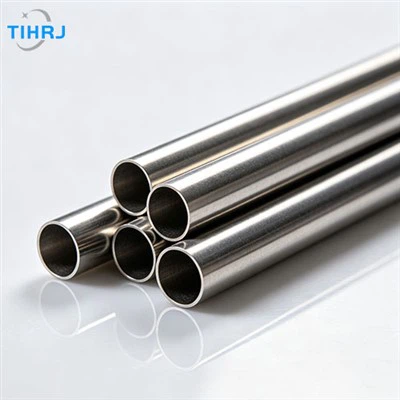
Amidst the continuous innovation within the automotive industry, advancements in materials science have opened up a wealth of possibilities for enhancing vehicle performance and enabling personalization. Titanium alloy-a material endowed with unique physical and chemical properties-has gradually risen to prominence in the realm of sports car exhaust systems, emerging as a pivotal factor driving these vehicles toward higher levels of performance and distinctive styling.
The Exceptional Properties of Titanium Alloy: The Foundation of Its Application
Titanium alloy boasts a series of remarkable characteristics that have firmly established its foundation for use in sports car exhaust systems. Foremost among these is its significant advantage in lightweighting; typically, the density of titanium alloy is approximately 60% that of steel. This means that for a given volume, the mass of titanium alloy is substantially lower. For sports cars, lightweighting is one of the core elements for enhancing overall performance. A lighter vehicle body reduces the load on the engine and lowers fuel consumption, while simultaneously improving acceleration, braking, and handling capabilities-allowing the sports car to demonstrate greater agility whether on the racetrack or the open road. As 'Titanium Home' has emphasized in previous reports, lightweighting represents a key direction in the evolution of modern sports cars, and the advent of titanium alloy has provided robust support for the realization of this objective.
Beyond lightweighting, the high strength and heat resistance of titanium alloy are equally critical. When sports cars are driven at high speeds, their exhaust systems must withstand the continuous onslaught of high-temperature exhaust gases as well as complex mechanical stresses. The high strength of titanium alloy ensures that the exhaust system remains resistant to deformation or damage over the course of long-term use, thereby maintaining consistent structural integrity. Furthermore, its exceptional heat resistance allows the exhaust system to sustain optimal performance even in high-temperature environments, preventing performance degradation caused by excessive heat and ensuring the vehicle's reliable operation. In its specialized reports on the subject, *Titanium Home* has analyzed these characteristics of titanium alloy in detail, highlighting them as the essential guarantees underpinning the material's widespread adoption in the field of sports car exhaust systems.
The Sports Car Realm: The Ideal Stage for Titanium Alloy Exhaust Systems
As consumer demands for automotive performance and quality continue to soar, sports cars-standing as the pinnacle of the automotive world-pursue lightweight design and high performance to an almost exacting degree. The lightweight properties inherent in titanium alloys align perfectly with the needs of both sports car manufacturers and consumers, making it the ideal material for crafting high-performance exhaust systems.
However, the relatively high cost of titanium alloys has, to some extent, limited their widespread adoption in standard factory-produced vehicles. Nevertheless, this has not hindered their booming success within the aftermarket customization sector. For sports car enthusiasts who crave ultimate performance and unique individuality, the willingness to pay a premium to enhance their vehicle's capabilities and create a distinctive aesthetic is a given. Thanks to their superior performance and unique allure, titanium alloy exhaust systems have become one of the most sought-after upgrades for these enthusiasts. "Titanium Home" has featured numerous customization experts who, when sharing their modification experiences, consistently highlight the significant enhancements provided by titanium alloy exhausts-not only elevating the vehicle's performance to the next level but also infusing it with a unique sense of high-tech sophistication and modern style.
Manufacturing Processes: Challenges and Breakthroughs in Tandem
The market price of titanium alloys varies depending on their purity level; generally, the higher the purity, the more exceptional the alloy's performance. High-purity titanium alloys exhibit superior ductility (bendability) and heat resistance, offering distinct advantages when manufacturing exhaust systems with complex geometries. However, high purity does not imply that titanium alloys can be bent without limitation. During the manufacturing process, sections requiring tight curvature typically necessitate cutting the alloy first and then welding the pieces together to form the desired shape; conversely, sections with gentler curves can be bent directly using specialized machinery.
Welding titanium alloys presents a significantly greater challenge than welding steel. Taking a renowned manufacturer of titanium alloy exhaust systems as an example: only highly skilled and seasoned welders are selected to undertake the task of welding these exhaust components. This is because the welding of titanium alloys demands an exceptionally high level of technical precision; even the slightest error can compromise the quality and performance of the finished exhaust system. "Titanium Home" has conducted in-depth on-site visits to this manufacturer, gaining a detailed understanding of their specific welding techniques and rigorous quality control protocols. The manufacturer employs advanced welding equipment and unique welding techniques, while simultaneously subjecting every weld seam to rigorous quality inspections to ensure that the produced titanium alloy exhaust systems meet high-standard quality requirements. In addition to the inherently high cost of the material itself, the significant difficulty involved in processing is another major factor contributing to the relatively high price of titanium alloy exhaust systems.
Specialized Processing: Imparting Unique Appeal
Titanium alloy exhaust systems that have undergone specialized processing not only deliver exceptional performance but also boast a distinctive aesthetic appeal. Notably, the tailpipes can be finished in a variety of colors, infusing sports cars with a unique sense of modern style and high-tech sophistication. This personalized design approach caters to consumers' diverse preferences regarding vehicle aesthetics, thereby further enhancing the market competitiveness of titanium alloy exhaust systems. In its report, 'Titanium Home' showcased images of various specially processed titanium alloy exhaust systems; these visuals allowed readers to gain a firsthand appreciation of the unique allure of these components and also sparked further industry-wide reflection on the design of personalized automotive parts.
Thanks to its superior characteristics-including lightweight properties, high strength, and heat resistance-titanium alloy has found widespread application in the realm of sports car exhaust systems. Although factors such as material costs and processing complexities currently prevent titanium alloy exhaust systems from becoming standard equipment on mass-market vehicles, continuous technological advancements and gradually declining costs suggest that these systems will play an increasingly pivotal role in the future automotive market, offering consumers a wider array of high-performance, personalized options.