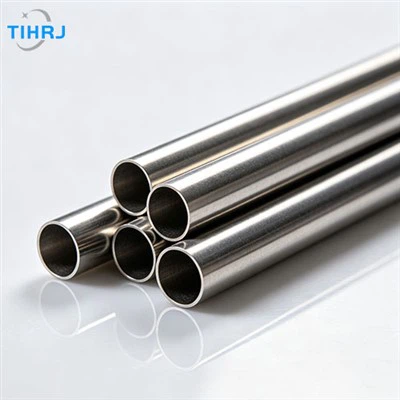
Yes-titanium is generally a very good material for many types of rings, both as industrial ring components (e.g., seals, wear rings, retaining rings, shaft rings) and as consumer jewelry (hands rings). The best choice depends on ring function, surface finish, and how it will be manufactured and finished.
1) Titanium ring for jewelry: commonly a good choice
Why titanium is popular
Excellent corrosion resistance: Good for daily wear, sweat, humidity, and most household exposures.
Lightweight: Comfortable compared with many steels or precious metals.
Good biocompatibility: Many people tolerate titanium well; it's widely used in medical implants (still, individuals can have sensitivities to coatings/finishes).
Strong and durable: While not as hard as some hard ceramics, titanium resists everyday wear well.
Finish versatility: Titanium can be anodized to create attractive colors (for jewelry where "colored titanium" is desired).
What to watch out for
Scratch resistance: Titanium is tougher than many metals, but it's not "diamond-hard." It can scratch, especially on the softer surface finish.
Surface appearance over time: Matte/brushed finishes may wear evenly; polished finishes can show hairline scratches sooner.
Anodized color durability: Color can fade or wear with abrasion depending on process and lifestyle.
Practical conclusion for jewelry: Titanium rings are often a strong, comfortable, low-maintenance option, especially if you want a modern aesthetic and corrosion resistance.
2) Titanium ring as an industrial component: very good when chemistry/weight matter
In industry, "ring" can mean many things (retaining ring, seal ring, wear ring, spacer ring, etc.). Titanium can be a great material when you need:
Typical industrial advantages
High corrosion resistance in many chemical environments (especially compared with carbon steel).
High strength-to-weight ratio (helpful in weight-sensitive systems).
Good performance at elevated temperatures depending on the alloy and design.
Longevity when the environment is aggressive (chlorides, wet corrosion, etc., though exact risk depends on conditions).
Typical industrial concerns
Cost: Titanium is usually more expensive than common steels.
Machining and forming difficulty: Tooling wear and process control can be more demanding.
Welding/joining complexity: Titanium is sensitive to contamination during fabrication.
Compatibility and galvanic effects: If titanium contacts other metals in an electrolyte, you must manage electrical isolation and joint design.
Design matters: For seal/wear rings, surface roughness, contact pressure, and mating material selection are often more important than "titanium vs. steel" alone.
Practical conclusion for industrial rings: Titanium is often an excellent "corrosion/weight" choice, but the final decision must consider the exact ring function and environment.
3) Which titanium grade depends on the ring
CP titanium (commercially pure, e.g., Grades 1–4): Often chosen for corrosion resistance and formability; strength is lower than many alloys.
Ti-6Al-4V (Grade 5): Common alloy for higher strength and broader mechanical performance.
Industrial rings may specify other grades depending on temperature, strength, and corrosion requirements.
For jewelry, you may see "titanium" meaning a specific commercial grade or an alloy; the performance is affected accordingly.
4) Quick decision guide
Choose titanium if you want:
Good corrosion resistance
Low weight
Long-term durability / comfort (for jewelry)
Resistance to harsh chemical environments (for industrial ring components)
Consider alternatives if you need:
Maximum scratch hardness (you may prefer cobalt-chrome, tungsten carbide, or ceramic finishes for jewelry)
Extremely cost-sensitive mass production without corrosion drivers
Bottom line
Jewelry rings: Titanium is usually a very good material-comfortable, corrosion-resistant, and stylish-best for people who accept "titanium scratches" as a normal wear characteristic.
Industrial ring components: Titanium is often an excellent engineering choice when corrosion/weight/elevated temperature requirements justify the cost.
If you tell me which kind of ring you mean (hand ring style vs. what the industrial ring does-seal, wear, retaining, etc.) and the environment (salt/chemicals/temperature), I can suggest whether titanium is the best option and what grade/surface treatment typically fits.