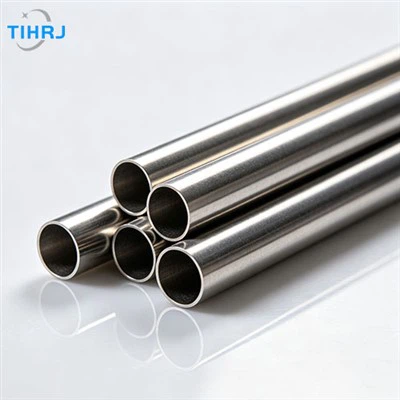
When selecting titanium for industrial, medical, or consumer applications, you'll often encounter a choice between commercially pure titanium and titanium alloy. Both have unique properties and advantages. So, which is better? The answer depends on your specific requirements.
1. What's the Difference?
Commercially Pure Titanium (CP Titanium):
Made up of >99% titanium.
Comes in grades (Grade 1 to Grade 4), with increasing strength and decreasing ductility.
Known for excellent corrosion resistance, ductility, and biocompatibility.
Titanium Alloy:
Titanium is mixed with small amounts of other metals (e.g., aluminum, vanadium, molybdenum).
Most common is Grade 5 (Ti-6Al-4V), which has 6% aluminum and 4% vanadium.
Alloys are engineered for higher strength, specific thermal or mechanical properties, or enhanced formability.
2. Key Properties Comparison
| Property | CP Titanium | Titanium Alloy (e.g., Ti-6Al-4V) |
|---|---|---|
| Strength | Moderate | 2x–3x higher |
| Ductility | High (very formable) | Moderate to low |
| Corrosion Resistance | Outstanding | Very good (slightly less than CP) |
| Biocompatibility | Excellent | Excellent (common in implants) |
| Weldability | Excellent | Good to fair (can be more difficult) |
| Cost | Lower | Higher (due to alloying elements) |
3. When to Use Each
Choose CP Titanium When:
Superior corrosion resistance is crucial (e.g., chemical processing, marine environments).
Ductility and ease of fabrication matter (e.g., deep drawn shapes, cold forming).
Maximum biocompatibility is required (some medical implants, body jewelry).
Choose Titanium Alloy When:
High strength-to-weight ratio is needed (e.g., aerospace, automotive, high-performance sports equipment).
Component must withstand higher loads or temperatures.
Wear resistance or specific mechanical properties are required.
4. Common Applications
| Application | Preferred Material |
|---|---|
| Aircraft structures | Titanium Alloy (Grade 5, etc.) |
| Jet engine parts | Titanium Alloy |
| Ship hulls, heat exchangers | CP Titanium (Grade 2, 3) |
| Medical implants | Both (CP for dental, Alloy for bone) |
| Sporting goods (bike frames, golf clubs) | Titanium Alloy |
| Chemical processing | CP Titanium |
5. Summary Table
| Factor | CP Titanium | Titanium Alloy |
|---|---|---|
| Strength | ★★☆☆☆ | ★★★★★ |
| Corrosion Resistance | ★★★★★ | ★★★★☆ |
| Ductility | ★★★★★ | ★★☆☆☆ |
| Machinability | ★★★★☆ | ★★★☆☆ |
| Weldability | ★★★★★ | ★★★☆☆ |
| Cost | ★★★★☆ | ★★☆☆☆ |
| Specialty Uses | Chemical, Marine | Aerospace, Medical |
Conclusion
Titanium alloys are "better" when you need high strength and performance under stress or heat.
CP titanium is "better" for corrosion resistance, formability, and applications where maximum purity or ductility is essential.
The best choice depends on your specific application and priorities.
Want expert advice for your project or a deeper dive into which titanium grade or alloy fits your needs? Let me know your application details!