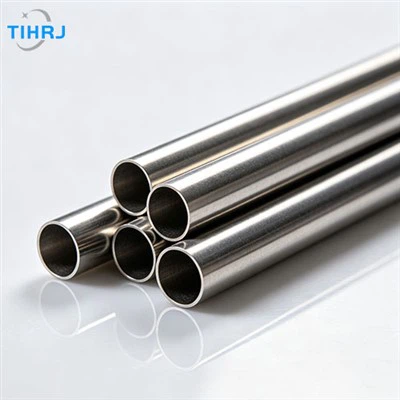
Titanium is "special" mainly because it combines a rare set of properties: it's light, strong, highly corrosion-resistant, and in many medical and industrial contexts it's also very reliable and biocompatible. But it's not magic-its special reputation comes from how well titanium performs in demanding environments and how its surface chemistry behaves.
1) The big headline: high strength-to-weight
Compared with steel, titanium is typically much lighter while still offering strong mechanical performance. That strength-to-weight ratio is why titanium is heavily used in:
aerospace structures (where every kilogram matters),
high-performance engineering components,
applications where strength and weight savings must both be achieved.
In industry, this matters because designers can sometimes reduce total mass while meeting strength, stiffness, and durability targets-leading to better fuel efficiency or payload capability.
2) Corrosion resistance you can trust
Titanium is famous for its ability to resist corrosion in many harsh environments. The key mechanism is that titanium forms a thin, stable oxide layer on its surface. This passive layer helps protect the metal from further deterioration in conditions like:
marine/saltwater exposure,
many chemical processing environments,
fluids where other metals might pit, rust, or degrade faster.
This isn't absolute-corrosion behavior depends on alloy grade, surface condition, and the specific chemical environment-but titanium is widely chosen because it performs well where corrosion is a major risk.
3) Great fatigue and durability potential (when engineered correctly)
Titanium can offer excellent fatigue resistance, especially in aerospace and medical implant contexts where parts experience repeated loading over years. Engineers usually get best results by selecting the right titanium alloy and controlling heat treatment, surface finish, and design details (sharp corners, poor weld quality, and surface defects can significantly affect fatigue life).
So "special" isn't only the material-it's the way titanium can be manufactured and processed to deliver long service life.
4) Biocompatibility and medical-grade surface behavior
Titanium is commonly used in medical and dental implants (e.g., dental implants, hip and knee components, bone-anchoring devices). Its oxide layer is generally favorable for reducing adverse reactions, and many titanium implants rely on surface treatments (like porous coatings or specific roughness) to support tissue integration.
In industry, this makes titanium valuable not just because it's "non-toxic," but because it can be engineered for long-term contact with the human body.
5) Heat and temperature performance (especially for alloys)
Some titanium alloys retain useful strength at elevated temperatures better than many aluminum alloys. That's why titanium appears in:
parts of jet engines,
high-temperature aerospace components,
performance exhaust/engine-related applications (depending on grade and operating conditions).
Again, alloy choice and heat treatment matter-commercially pure titanium behaves differently than high-alloy titanium systems like Ti-6Al-4V.
6) It's also "special" because of manufacturing challenges
A lot of the perceived value comes from how hard titanium is to work with. Titanium can be:
harder on cutting tools (machining wear),
more sensitive to welding contamination (oxygen/nitrogen uptake can reduce properties),
more demanding in quality control and certification.
Because manufacturing is more complex, titanium components often require specialized processes (welding procedures, non-destructive testing, strict standards). The difficulty tends to increase cost-but it also means titanium can deliver high-performance outcomes when engineered properly.
7) A quick reality check: titanium has trade-offs
To be fully accurate: titanium is not universally "the best" metal.
It can be expensive compared with steel and many aluminum grades.
It can be challenging to fabricate and machine.
Depending on the environment, titanium can still experience wear, crevice corrosion, or issues related to galvanic corrosion when paired with other metals (design must address this).
Bottom line
Titanium is special because it uniquely combines lightweight strength, excellent corrosion resistance, strong fatigue/durability potential, and biocompatibility, while still offering good high-temperature capability in certain alloys. Its special reputation is earned in industries where reliability in tough conditions matters more than low cost.