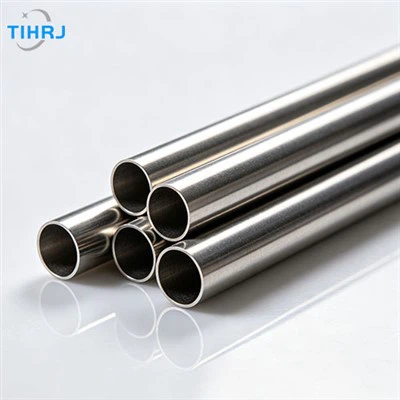
Whether titanium is "more valuable than gold" depends on how you define value-by market price per kilogram, by strategic/industrial importance, or by value created in a finished product. In raw commodity terms, titanium is generally far less valuable than gold. But in engineering contexts, titanium can be extremely valuable for specific applications where its performance is irreplaceable.
1) Price reality: gold usually wins by a huge margin
Gold is a precious metal with a well-known global spot-market price and strong demand from jewelry, investment, and (to a smaller extent) industrial uses. Titanium, on the other hand, is a large-volume industrial metal used in aerospace, chemical processing, medical devices, and manufacturing. Even though titanium is expensive compared with steel, it's typically not priced at "precious metal" levels like gold.
So if your question is "Who is worth more per unit weight in the open market?" the answer is: gold is vastly more valuable than titanium.
2) Industry "value" is not the same as commodity price
Titanium's value is often about performance and usefulness rather than scarcity at the commodity level. Titanium can be worth far more inside a component because it enables things that cheaper materials cannot do as well, such as:
High strength-to-weight ratio (important in aircraft and performance engineering)
Excellent corrosion resistance (sea water and many chemical environments)
Biocompatibility for certain implants (medical-grade titanium)
High fatigue performance when properly designed and heat-treated (application-dependent)
In other words, titanium may be low-cost relative to gold as a commodity, but once you translate it into outcomes-lighter vehicles, longer component life, fewer corrosion failures-it can represent very high engineering value.
3) "Titanium-rich" vs "titanium-valuable" (a key nuance)
Titanium exists in abundant mineral form (like ilmenite and rutile), so the element is relatively widespread geologically. But the value comes from:
how much of it can be produced economically,
the complexity of converting ore to metal,
and the ability to fabricate and certify high-grade titanium components.
Gold, by contrast, is scarce in an economic sense and benefits from strong investment demand, which keeps its market value very high. That's why titanium may be industrially critical but still not comparable to gold in pure monetary value per kilogram.
4) Finished parts: the value can flip locally
A practical way to compare "value" is to look at what it costs to make a product:
A kilogram of gold is expensive, but gold is usually used in thin layers or small masses (rings, plating, jewelry).
Titanium is used in much larger quantities in bulk structural parts (aircraft frames, pressure vessels, medical hardware).
So even though titanium's raw material price is lower, titanium components can become extremely costly due to machining difficulty, welding requirements, non-destructive testing, heat treatment, and certification.
Still, that usually doesn't mean titanium beats gold on a pure "worth per kg" basis-it means titanium is economically valuable in engineering supply chains.
5) Bottom line
Per kilogram commodity value: Gold is far more valuable than titanium.
Engineering/industrial strategic value: Titanium can be more valuable than many materials for certain missions (corrosion resistance, weight savings, biocompatibility), so it may feel "more valuable" in those contexts.