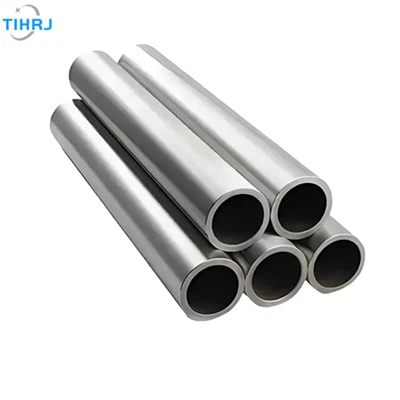
There are many processing methods for titanium pipe fittings, many of which belong to the category of mechanical processing. The most commonly used methods are stamping, forging, roller processing, rolling, bulging, stretching, bending, and combined processing. Pipe fitting processing is an organic combination of machining and metal pressure processing.

Here are some examples:
Forging method: Use a forging machine to punch out the end or part of the pipe to reduce the outer diameter. Commonly used forging machines are rotary, connecting rod, and roller.
Stamping method: Use a tapered core on the punch press to expand the pipe end to the required size and shape.
Roller method: Place a core in the pipe and push the outer periphery with a roller for round edge processing.
Rolling method: Generally, a mandrel is not used, which is suitable for the inner round edge of thick-walled pipes.
Bending forming method: There are three commonly used methods. One method is called stretching method, another method is called stamping method, and the third method is the roller method that everyone is familiar with. There are 3-4 rollers, two fixed rollers, and one adjustment roller. The fixed roller spacing is adjusted, and the finished pipe fittings are bent. This method is widely used. If spiral pipes are produced, the curvature can be increased.
Bulging method: One method is to place rubber in the tube, compress it with a punch on the top, so that the tube bulges out; the other method is hydraulic bulging forming, filling the middle of the tube with liquid, and the liquid pressure bulges the tube into the required shape. Most of the production of corrugated pipes that we commonly use uses this method.