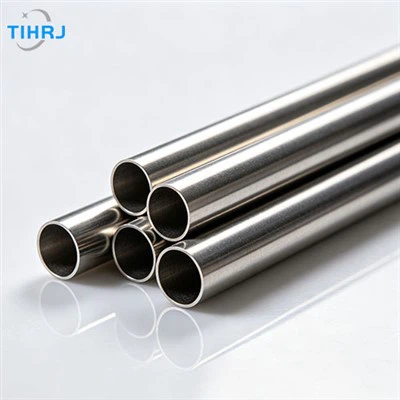
In automotive exhaust systems, pure titanium is increasingly becoming an important material for high-end exhaust components due to its excellent lightweight properties, high temperature resistance, and corrosion resistance. Especially in high-performance vehicles, the use of titanium alloys or pure titanium can significantly improve the performance of the exhaust system. In the manufacturing process of pure titanium bends, the extrusion process is a core technology, directly affecting the shape accuracy, surface quality, and overall performance of the bend. The following will detail the extrusion process for pure titanium bends.
Material Selection and Preparation for Titanium Bends
Before manufacturing pure titanium bends, it is necessary to select suitable pure titanium materials. Typically, Grade 2 titanium is chosen for automotive exhaust systems. This titanium alloy has good ductility and mechanical properties, making it suitable for the extrusion process. Grade 2 titanium alloy has a high titanium content and low impurities, possessing high temperature resistance, which meets the requirements for long-term use in the high-temperature environment of automotive exhaust systems.
Titanium Tube Cutting: According to design requirements, the titanium tubes are cut to the appropriate length. During the cutting process, care must be taken to avoid excessive deformation and thermal effects to prevent material damage.
Tube Surface Treatment: The surface of the titanium material needs to be clean, free of oil, oxide scale, and impurities to ensure smooth material flow during the extrusion process. Common surface cleaning methods include pickling or sandblasting.
Overview of the Titanium Bend Extrusion Process
The extrusion process is a process of pushing the titanium tube in a certain direction using external force to form a bend. For the manufacturing of pure titanium bends, extrusion is usually performed under temperature-controlled conditions to ensure uniform plastic deformation of the material. During the extrusion process, the ductility and fluidity of titanium are relatively poor, so the control of temperature and pressure is crucial.
1. Hot Extrusion
Hot extrusion involves heating the titanium tube to a certain temperature, allowing it to undergo plastic deformation under lower stress, thereby achieving a change in shape. In the hot extrusion process, temperature control is crucial. Too low a temperature will prevent the material from flowing plastically, while too high a temperature may lead to oxidation of the titanium surface, affecting the quality of the final product.
Heating Temperature Control: Generally, the hot extrusion temperature for pure titanium is between 800°C and 1000°C. This temperature range can effectively reduce the rheological stress of the titanium material, improve its plasticity, and prevent excessive oxidation.
Heating Method: Heating is typically performed using resistance heating furnaces or electromagnetic heating furnaces. Even heating is required to avoid localized overheating or uneven cooling.
2. Cold Forming
The forming operation usually requires a dedicated forming machine; common equipment includes forming machines and hydraulic presses. The equipment needs to have good stability and pressure control capabilities to ensure the smooth progress of the forming process. The specific operating steps include:
Feeding: Place the heated titanium tube into the mold of the forming machine, ensuring accurate positioning of the tube.
Forming: The titanium tube is pushed into the mold by hydraulic or mechanical action to form a curved shape. During the forming process, the inner and outer surfaces of the titanium material are subjected to different stresses, and the pressure and speed of the forming machine need to be precisely controlled.
Cooling: After forming, the titanium tube needs to be cooled quickly to maintain its shape stability. During the cooling process, the internal structure of the titanium material gradually hardens, preventing deformation.
Finishing and Correction of Titanium Elbows
After forming, the surface of the titanium elbow may have some defects, such as slight dents, scratches, or incomplete shape accuracy. To ensure the final quality of the elbow, a series of finishing processes are usually required:
Oxide Layer Removal: During the hot forming process, an oxide layer may form on the surface of the titanium material, affecting the appearance and performance of the elbow. During the finishing process, the elbow needs to be acid-washed or mechanically polished to remove the oxide layer and maintain a smooth surface.
Dimensional Trimming: During the forming process, there may be some errors in the accuracy of the elbow, so trimming is required. The outer diameter, inner diameter, and bending angle of the elbow can be fine-tuned through mechanical processing (such as turning and grinding).
Deburring: During the forming process, burrs may be generated on the inner and outer edges of the elbow, which need to be trimmed through deburring operations to ensure the precision and sealing performance of the elbow.
Heat Treatment and Strengthening of Titanium Elbows
Pure titanium elbows after forming usually require certain heat treatment steps to optimize their material properties. Heat treatment can eliminate internal stresses from the forming process, improve the microstructure of the titanium alloy, and increase its tensile strength and toughness. Common heat treatment methods include:
Annealing Treatment: The elbow is heated to approximately 600°C to 700°C, and then slowly cooled, helping the titanium alloy recover its original mechanical properties.
Aging Treatment: For titanium alloy components requiring high performance, aging treatment can be applied to further enhance their strength.
Anodizing: Through electrolytic treatment, a dense oxide film is formed on the surface of the titanium alloy. This film effectively prevents oxidation and corrosion of the titanium material and can produce different colors depending on the treatment conditions, improving aesthetics.
Sandblasting: The elbow surface is polished by sandblasting to remove oxide scale and increase surface roughness, thereby improving its bonding with other components.
The manufacturing process of pure titanium elbows is a high-precision process involving multiple steps, including material selection, heating, forming, finishing, heat treatment, and surface treatment. Each step requires precise control to ensure the quality and performance of the final product. With technological advancements, more and more high-performance cars are adopting exhaust systems made of pure titanium materials, and the continuous optimization of the forming process will provide the automotive industry with even better exhaust solutions.