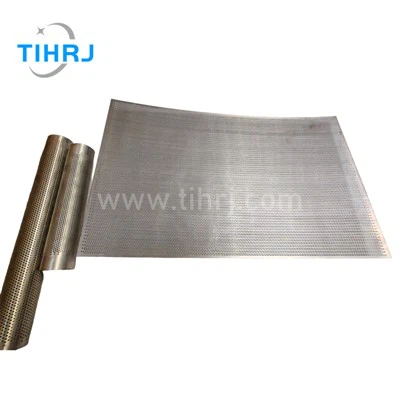
As a supplier of Titanium Reducers, I often encounter inquiries from clients regarding the heat dissipation capacity of these essential components. In this blog post, I aim to delve into the intricacies of the heat dissipation capacity of Titanium Reducers, exploring the factors that influence it and its significance in various applications.
Understanding Titanium Reducers
Before we dive into the heat dissipation capacity, let's first understand what Titanium Reducers are. Titanium Reducers are specialized components used in a wide range of industries, including automotive, aerospace, and chemical processing. They are designed to connect two pipes of different diameters, allowing for a smooth transition of fluid or gas flow. Titanium Reducer is made from high - quality titanium, a metal known for its excellent strength - to - weight ratio, corrosion resistance, and high melting point.
Factors Affecting the Heat Dissipation Capacity of Titanium Reducers
Material Properties
Titanium has unique thermal properties that play a crucial role in heat dissipation. Titanium has a relatively low thermal conductivity compared to some other metals like copper or aluminum. Thermal conductivity is a measure of a material's ability to conduct heat. A lower thermal conductivity means that titanium does not transfer heat as quickly as these more conductive metals. However, this can be an advantage in some applications where slow heat transfer is desired to prevent rapid temperature changes in the surrounding environment.
The specific heat capacity of titanium also affects heat dissipation. Specific heat capacity is the amount of heat energy required to raise the temperature of a unit mass of a substance by one degree Celsius. Titanium has a specific heat capacity of approximately 0.523 J/g°C. This value indicates that titanium can absorb a certain amount of heat energy without experiencing a significant increase in temperature, which is beneficial for heat dissipation as it can act as a heat sink to some extent.
Design and Geometry
The design and geometry of a Titanium Reducer have a significant impact on its heat dissipation capacity. The surface area of the reducer is a key factor. A larger surface area allows for more contact with the surrounding air or coolant, facilitating better heat transfer. For example, a Titanium Reducer with a corrugated or finned surface will have a greater surface area compared to a smooth - surfaced one, resulting in enhanced heat dissipation.
The shape of the reducer also matters. A well - designed reducer that promotes laminar flow of the fluid or gas passing through it can improve heat transfer. Laminar flow ensures that the fluid or gas is in better contact with the inner surface of the reducer, allowing for more efficient heat exchange between the fluid and the reducer material.
Operating Conditions
The operating conditions under which a Titanium Reducer is used can greatly influence its heat dissipation capacity. The temperature of the fluid or gas flowing through the reducer is a primary factor. Higher inlet temperatures mean that more heat needs to be dissipated. Additionally, the flow rate of the fluid or gas affects heat transfer. A higher flow rate can increase the convective heat transfer coefficient, which is a measure of how effectively heat is transferred between the fluid and the solid surface of the reducer.
The ambient temperature and the presence of a cooling medium also play important roles. If the Titanium Reducer is operating in a high - temperature environment, it will be more challenging to dissipate heat. On the other hand, if there is a cooling medium such as water or air flowing around the reducer, it can significantly enhance the heat dissipation process.


Significance of Heat Dissipation Capacity in Different Applications
Automotive Industry
In the automotive industry, Titanium Reducers are commonly used in exhaust systems. The heat dissipation capacity of these reducers is crucial for maintaining the performance and longevity of the exhaust system. Exhaust gases can reach extremely high temperatures, and if the heat is not dissipated effectively, it can cause damage to other components in the vicinity, such as the engine block or nearby wiring. A Titanium Reducer with good heat dissipation capacity can help keep the exhaust system at a safe operating temperature, reducing the risk of overheating and component failure.
Aerospace Industry
In aerospace applications, Titanium Reducers are used in fuel and hydraulic systems. These systems operate under extreme conditions, including high pressures and temperatures. Effective heat dissipation is essential to prevent the degradation of fluids and the malfunction of components. The ability of Titanium Reducers to dissipate heat helps ensure the reliability and safety of aerospace vehicles, especially during long - duration flights or high - stress maneuvers.
Chemical Processing Industry
In the chemical processing industry, Titanium Reducers are used to handle corrosive chemicals and high - temperature fluids. Heat dissipation is important to prevent chemical reactions from being affected by excessive heat. If the temperature of the chemicals rises too high, it can lead to unwanted side reactions, reduced product quality, or even safety hazards. A Titanium Reducer with proper heat dissipation capacity can help maintain the stability of the chemical processes.
Measuring and Improving Heat Dissipation Capacity
To measure the heat dissipation capacity of a Titanium Reducer, various techniques can be used. One common method is to use thermal sensors to measure the temperature of the reducer and the fluid or gas at different points. By analyzing the temperature differences and the heat transfer rates, the heat dissipation capacity can be calculated.
There are several ways to improve the heat dissipation capacity of a Titanium Reducer. As mentioned earlier, increasing the surface area through the use of fins or corrugations is an effective approach. Another method is to use a cooling jacket around the reducer. A cooling jacket can circulate a coolant, such as water or a refrigerant, to remove heat from the reducer more efficiently.
Conclusion
In conclusion, the heat dissipation capacity of a Titanium Reducer is influenced by multiple factors, including material properties, design and geometry, and operating conditions. Understanding these factors is essential for optimizing the performance of Titanium Reducers in various applications. As a supplier of Titanium Reducer, we are committed to providing high - quality reducers with excellent heat dissipation capabilities.
If you are in need of Titanium Reducers for your specific application and want to discuss the heat dissipation requirements in detail, we invite you to contact us for a procurement negotiation. Our team of experts is ready to assist you in selecting the most suitable Titanium Reducers for your needs.
References
- Incropera, F. P., & DeWitt, D. P. (2002). Fundamentals of Heat and Mass Transfer. John Wiley & Sons.
- Ti - Industry. (n.d.). Properties of Titanium. Retrieved from [Ti - Industry official website]
- ASM Handbook Committee. (2000). ASM Handbook Volume 2: Properties and Selection: Nonferrous Alloys and Special - Purpose Materials. ASM International.