Hey there! As a supplier of titanium rods and bars, I often get asked about the different grades of titanium used for rods. It's a super important topic, especially if you're in the market for high - quality titanium products. So, let's dive right in and explore the various grades that are commonly used.
Grade 1 Titanium Rods
Grade 1 titanium is like the newbie on the block when it comes to titanium grades, but don't let that fool you. It's the purest form of commercially available titanium, with a minimum of 99.5% titanium content. This grade is known for its excellent formability, which means it can be easily shaped into different rod sizes and configurations.
One of the main advantages of Grade 1 titanium rods is their high corrosion resistance. They can withstand exposure to a wide range of environments, including saltwater, which makes them a popular choice for marine applications. For example, they can be used in boat fittings, where they need to resist the corrosive effects of saltwater over long periods.
Grade 1 titanium also has good ductility, which allows it to be bent and formed without cracking. This makes it suitable for applications where the rod needs to be manipulated during the manufacturing process. However, it's not the strongest grade out there. If you need a rod that can handle high loads and stresses, Grade 1 might not be the best choice.
Grade 2 Titanium Rods
Grade 2 titanium is a step up from Grade 1 in terms of strength. It still has a high level of purity, with around 99% titanium content. This grade strikes a nice balance between formability, corrosion resistance, and strength.
Grade 2 titanium rods are widely used in many industries. In the automotive industry, they can be used for various components such as engine parts and suspension systems. Their corrosion resistance ensures that these parts last longer, even in harsh operating conditions.
If you're interested in a Grade 2 titanium product, we offer the GR2 Titanium Hex Bar. This hex - shaped bar is not only strong but also has a unique shape that can be useful in specific applications where a regular round rod might not fit the bill.

Grade 5 Titanium Rods
Grade 5 titanium, also known as Ti - 6Al - 4V, is one of the most popular and widely used titanium alloys. It contains 6% aluminum and 4% vanadium, which significantly enhances its strength. In fact, Grade 5 titanium is about twice as strong as Grade 2 titanium.
This grade is commonly used in aerospace applications. Aircraft components such as landing gear, engine mounts, and structural parts often rely on Grade 5 titanium rods. The high strength - to - weight ratio of Grade 5 titanium is a huge advantage in aerospace, as it helps to reduce the overall weight of the aircraft while maintaining structural integrity.
Grade 5 titanium also has good fatigue resistance, which means it can withstand repeated loading and unloading cycles without failing. This makes it suitable for applications where the rod is subjected to dynamic stresses, like in some high - performance sports equipment.
Grade 9 Titanium Rods
Grade 9 titanium, or Ti3Al2.5V, is another important alloy. It has a lower aluminum and vanadium content compared to Grade 5, but it still offers a good combination of strength and formability.
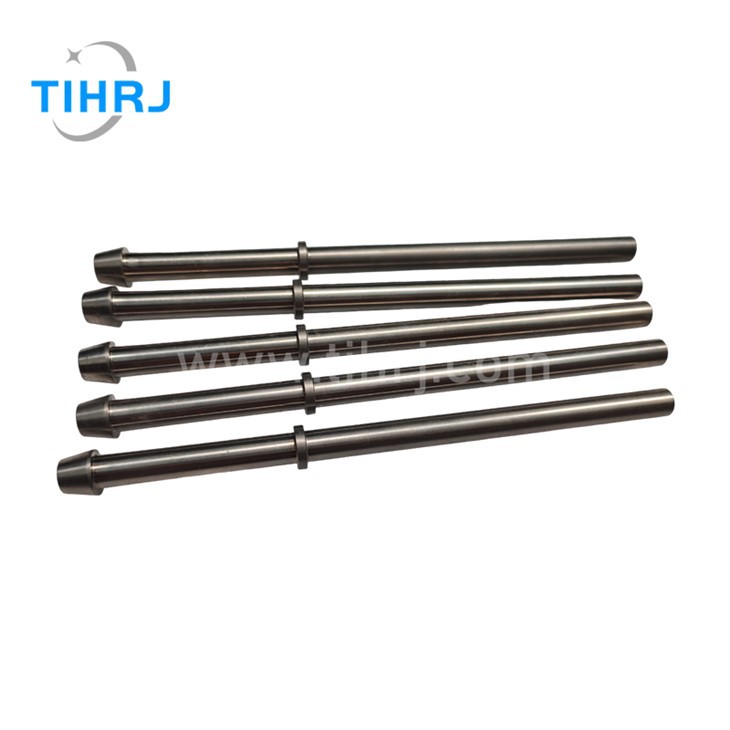
Grade 9 titanium rods are often used in the automotive and aerospace industries. In the automotive field, they can be used for exhaust systems. Our Titanium Exhaust Rod is made from high - quality Grade 9 titanium. The corrosion resistance of Grade 9 titanium ensures that the exhaust rod can withstand the high temperatures and corrosive gases produced by the engine.
We also offer the Ti3Al2.5V Titanium Gr9 Alloy Bar. This bar can be used in a variety of applications, from manufacturing small precision parts to larger structural components.
Other Grades
There are also other grades of titanium that can be used for rods, depending on the specific requirements of the application. For example, Grade 7 titanium has a similar composition to Grade 2, but with the addition of palladium. This addition enhances its corrosion resistance in certain environments, especially in reducing acids.
Grade 12 titanium contains molybdenum and nickel, which gives it good strength and corrosion resistance. It can be used in chemical processing equipment, where it needs to resist the corrosive effects of various chemicals.
Choosing the Right Grade
So, how do you choose the right grade of titanium for your rod? Well, it all comes down to your specific needs. If you need a rod that is highly formable and corrosion - resistant, Grade 1 or Grade 2 might be a good choice. If you require high strength, especially in applications where weight is a concern, Grade 5 or Grade 9 could be more suitable.
You also need to consider the environment in which the rod will be used. If it's going to be exposed to saltwater, high - temperature gases, or corrosive chemicals, you'll need a grade that can withstand those conditions.
Why Choose Us?
As a titanium rod and bar supplier, we have a wide range of grades and sizes available. Our products are made from high - quality titanium materials, and we ensure strict quality control throughout the manufacturing process. Whether you need a small quantity for a prototype or a large order for mass production, we can meet your requirements.
If you're interested in purchasing titanium rods or bars, don't hesitate to reach out to us. We're always happy to discuss your specific needs and help you choose the right grade and product for your application. We can also provide you with detailed product information, pricing, and delivery options. Let's start a conversation and see how we can work together to meet your titanium rod needs!
References
- "Titanium: A Technical Guide" by John R. Davis
- "The Properties and Applications of Titanium Alloys" by Robert Boyer, Geoffrey Welsch, and E. W. Collings