


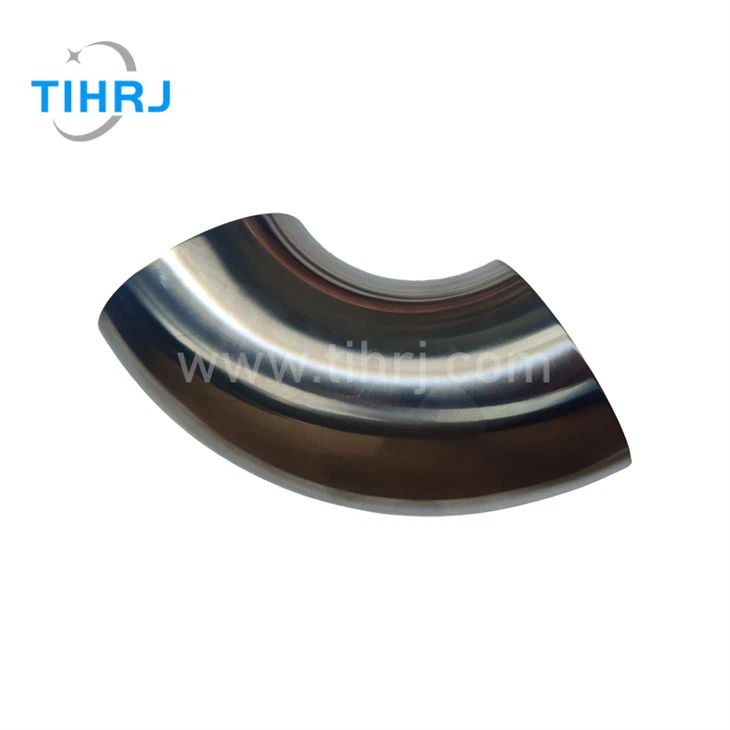
Elbows are a crucial component in various industries, especially in piping and exhaust systems. As an elbows supplier, I've encountered numerous inquiries about the cracking phenomenon in elbows. This blog aims to delve into the causes of elbow cracking, providing valuable insights for those in need of high - quality elbows such as our Titanium 45° Radius Elbow, Titanium 90° Radius Elbow, and Titanium 90 Degree Radius Elbow.
Material - related Causes
- Material Defects
- One of the primary reasons for elbow cracking is the presence of material defects. These can include inclusions, porosity, and micro - cracks that are introduced during the manufacturing process. For example, in the case of titanium elbows, if there are inclusions of other metals or non - metallic substances, these areas can act as stress concentration points. When the elbow is subjected to external forces, the stress at these points can exceed the material's strength, leading to crack initiation.
- Porosity, which is the presence of small holes in the material, can also weaken the elbow. During the casting or forging process of elbows, improper gas venting can result in porosity. These voids reduce the cross - sectional area available to withstand stress, increasing the likelihood of cracking.
- Material Incompatibility
- In some industrial applications, elbows may be exposed to different types of fluids or gases. If the material of the elbow is not compatible with the medium it is in contact with, it can lead to corrosion and subsequent cracking. For instance, in a chemical processing plant, if a carbon steel elbow is used in a highly acidic environment, the acid can react with the steel, causing it to corrode. Over time, the corrosion can penetrate the material, creating cracks. Titanium elbows are often a better choice in such corrosive environments due to their excellent corrosion resistance. However, even titanium can be affected if it comes into contact with certain aggressive chemicals under specific conditions.
Manufacturing - related Causes
- Improper Forming
- The forming process of elbows is critical. If the elbow is bent too sharply or unevenly during the manufacturing process, it can introduce residual stresses. For example, when a pipe is bent to form an elbow, if the bending radius is too small for the pipe's diameter and wall thickness, the outer surface of the bend can be stretched beyond its elastic limit, while the inner surface can be compressed. These residual stresses can remain in the elbow after the forming process. When the elbow is later subjected to additional loads, the combined effect of the residual and applied stresses can cause cracking.
- In addition, improper heat treatment during the manufacturing of elbows can also be a problem. Heat treatment is used to relieve residual stresses and improve the material's mechanical properties. If the heat treatment parameters such as temperature, heating rate, and cooling rate are not properly controlled, the material may not achieve the desired microstructure and strength. This can make the elbow more susceptible to cracking.
- Welding Defects
- In many cases, elbows are joined to other components through welding. Welding defects such as lack of fusion, porosity in the weld, and excessive weld reinforcement can lead to cracking. Lack of fusion occurs when the weld metal does not properly bond with the base metal. This creates a weak area in the joint. Porosity in the weld can reduce the strength of the joint, similar to porosity in the base material. Excessive weld reinforcement can cause stress concentration at the edges of the weld, increasing the risk of cracking.
Operational - related Causes
- Mechanical Loading
- Elbows in piping systems are often subjected to various mechanical loads. These can include pressure from the fluid or gas flowing through the pipe, as well as external forces such as vibrations and impacts. High - pressure fluid flow can create significant internal stresses in the elbow. If the pressure exceeds the design limit of the elbow, it can cause the material to deform and eventually crack.
- Vibrations can also be a major factor. In industrial settings, pumps, compressors, and other equipment can generate vibrations that are transmitted to the piping system. If the natural frequency of the elbow coincides with the frequency of the vibrations, resonance can occur. Resonance can amplify the vibrations, increasing the stress on the elbow and leading to cracking over time.
- Thermal Cycling
- Elbows in systems where there are significant temperature changes are at risk of thermal cycling - induced cracking. When an elbow is heated, it expands, and when it cools, it contracts. If the temperature changes are rapid or large in magnitude, the material of the elbow has to undergo repeated expansion and contraction. This can create thermal stresses. For example, in a power plant, steam - carrying elbows can experience large temperature fluctuations during startup and shutdown processes. The thermal stresses can cause fatigue cracking over time, especially if the material has low thermal fatigue resistance.
Environmental - related Causes
- Corrosion
- As mentioned earlier, corrosion is a major cause of elbow cracking. In addition to chemical corrosion, there are also other forms of corrosion such as galvanic corrosion and stress - corrosion cracking. Galvanic corrosion occurs when two different metals are in electrical contact in an electrolyte. For example, if a copper - lined elbow is in contact with a steel pipe in a water - filled system, a galvanic cell can be formed. The more active metal (in this case, steel) will corrode preferentially.
- Stress - corrosion cracking is a combination of tensile stress and a corrosive environment. Even a small amount of stress, such as residual stress from manufacturing, can, when combined with a corrosive medium, lead to cracking. For example, in a marine environment, stainless steel elbows can be susceptible to stress - corrosion cracking if they are exposed to chloride ions in seawater while under stress.
- Weathering
- In outdoor applications, elbows are exposed to the elements. Rain, snow, sunlight, and temperature variations can all have an impact on the elbow's integrity. For example, in cold climates, water can enter small cracks or pores in the elbow. When the water freezes, it expands, exerting additional pressure on the material. Over time, this repeated freezing and thawing can cause the cracks to grow. Ultraviolet radiation from sunlight can also degrade the surface of some materials, reducing their strength and making them more prone to cracking.
Operational - related Causes
-
Overloading
- If an elbow is subjected to loads that exceed its design capacity, cracking is likely to occur. This can happen in various scenarios. For example, in a construction project, if a piping system is modified to carry a higher flow rate or pressure than originally intended, the elbows in the system may be overloaded. The increased pressure can cause the walls of the elbow to deform and eventually crack.
- In industrial machinery, sudden shocks or impacts can also overload the elbows. For instance, in a heavy - duty manufacturing plant, if there is a sudden start - up or shutdown of equipment, the resulting hydraulic or pneumatic shocks can be transmitted to the piping system, overloading the elbows.
-
Poor Installation
- Improper installation of elbows can also lead to cracking. If the elbow is not properly aligned with the adjacent pipes, it can introduce additional stresses. For example, if there is a misalignment between the centerlines of two pipes when connecting an elbow, the elbow will be subjected to bending and torsional forces. These forces can cause the elbow to crack over time. In addition, if the fasteners used to secure the elbow are tightened too much or unevenly, it can create local stress concentrations, increasing the risk of cracking.
As an elbows supplier, we are committed to providing high - quality elbows that are less prone to cracking. Our Titanium 45° Radius Elbow, Titanium 90° Radius Elbow, and Titanium 90 Degree Radius Elbow are manufactured using advanced techniques and strict quality control measures to minimize the risk of cracking. We understand the importance of reliable elbows in your industrial applications. If you are in need of high - quality elbows or have any questions about elbow selection and usage, please feel free to contact us for procurement and further discussion.

References
- ASM Handbook Volume 11: Failure Analysis and Prevention, ASM International.
- Corrosion Basics: An Introduction, NACE International.
- Welding Handbook, American Welding Society.



