Hey there! I'm a supplier of bend products, and today I wanna chat about how to use "bend" in a negative imperative sentence. It might sound a bit technical at first, but it's actually pretty straightforward once you get the hang of it.
Let's start with the basics. An imperative sentence is a type of sentence that gives a command or makes a request. A negative imperative sentence, as the name suggests, is an imperative sentence that tells someone not to do something. When we use "bend" in a negative imperative sentence, we're basically telling someone not to bend something.
For example, you might say, "Don't bend that pipe! It's too brittle." In this sentence, "Don't bend" is the negative imperative construction. The word "bend" here is a verb, and it's being used to convey the action that should not be taken.
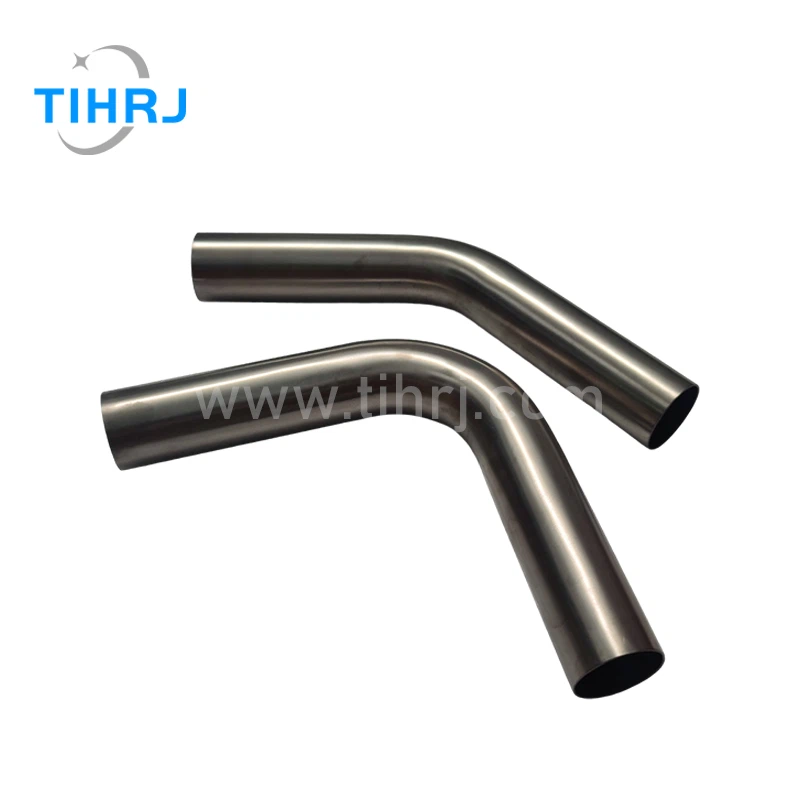
Now, as a bend supplier, I deal with all sorts of bends on a daily basis. We have 2.5″ Titanium 90 Degree Mandrel Bend, Titanium 90° Mandrel Bend, and Titanium 45° Mandrel Bend. These bends are used in various industries, especially in the automotive and aerospace sectors.
When it comes to handling these bends, there are some important things to keep in mind. For instance, you should never bend them beyond their specified limits. So, a negative imperative sentence like "Don't bend the Titanium 90° Mandrel Bend more than the recommended angle" is crucial. This is because over - bending can cause the material to crack or lose its structural integrity.
Let's break down the structure of a negative imperative sentence with "bend" a bit more. Usually, we start with "Don't" followed by the base form of the verb "bend". Sometimes, we can also use "Never" instead of "Don't" for a stronger emphasis. For example, "Never bend the 2.5″ Titanium 90 Degree Mandrel Bend without proper tools."
Another way to use "bend" in a negative imperative is in a more general warning. Say you're working in a workshop, and you have a bunch of bends lying around. You might shout out, "Don't bend any of these bends until you've checked the specifications." This kind of sentence helps to prevent mistakes and ensures that the bends are used correctly.
In the context of our products, the quality of the bends is of utmost importance. We use high - grade titanium to make our bends, which gives them excellent strength and corrosion resistance. But even with these high - quality materials, improper bending can ruin the product. That's why it's so important to follow the negative imperative rules when handling them.
Let's look at some more examples. If you're installing a Titanium 45° Mandrel Bend in an exhaust system, you might say to your colleague, "Don't bend the bend while you're trying to fit it. Use the right connectors instead." This not only protects the bend but also makes the installation process smoother.
When training new employees or customers on how to handle our bends, I often use negative imperative sentences as a quick and easy way to convey important information. For example, "Don't bend the bends during transportation. Make sure they're properly packed." This simple instruction can save a lot of trouble and prevent damage to the products.
It's also important to note that the tone of a negative imperative sentence can vary. Sometimes, it can be a friendly reminder, like "Hey, don't bend that bend too much, okay?" Other times, it can be a more serious warning, especially in a high - stakes environment like an aerospace manufacturing plant. For example, "Do not bend the Titanium 90° Mandrel Bend under any circumstances. This is a critical part."
In addition to using "Don't" and "Never", we can also use other negative words to create similar sentences. For example, "Avoid bending the 2.5″ Titanium 90 Degree Mandrel Bend if you're not sure about the process." This gives a more cautious and advisory tone.
As a bend supplier, I'm always looking for ways to educate my customers about the proper use of our products. Using negative imperative sentences is a great way to do that. It's a simple and effective way to communicate important safety and usage guidelines.
If you're in the market for high - quality bends, whether it's for your automotive project or an aerospace application, we've got you covered. Our 2.5″ Titanium 90 Degree Mandrel Bend, Titanium 90° Mandrel Bend, and Titanium 45° Mandrel Bend are made with the highest standards in mind. And we're here to help you use them correctly.
If you have any questions about our bends or need more information on how to handle them, feel free to reach out. We're always happy to have a chat and assist you with your procurement needs. Whether you're a small - scale hobbyist or a large - scale industrial manufacturer, we can provide the right bends for your project.

So, if you're interested in our products, don't hesitate to contact us for a procurement discussion. We're confident that our bends will meet your requirements and provide you with long - lasting performance.
References:
- General English grammar resources on imperative sentences
- Industry - specific guidelines for handling titanium bends