In the vast expanse of the English language, words often carry multiple meanings, and "bend" is no exception. As a supplier of bend products, I've witnessed firsthand how this simple word takes on diverse interpretations across different fields. Let's embark on a journey to explore the various meanings of "bend" in engineering, music, and everyday life.
Bend in Engineering and Manufacturing
In the engineering and manufacturing realm, "bend" is a term that holds significant importance. It refers to the process of shaping a material, typically metal, into a curved or angled form. This process is crucial in the production of various components, from pipes and tubes to structural elements.

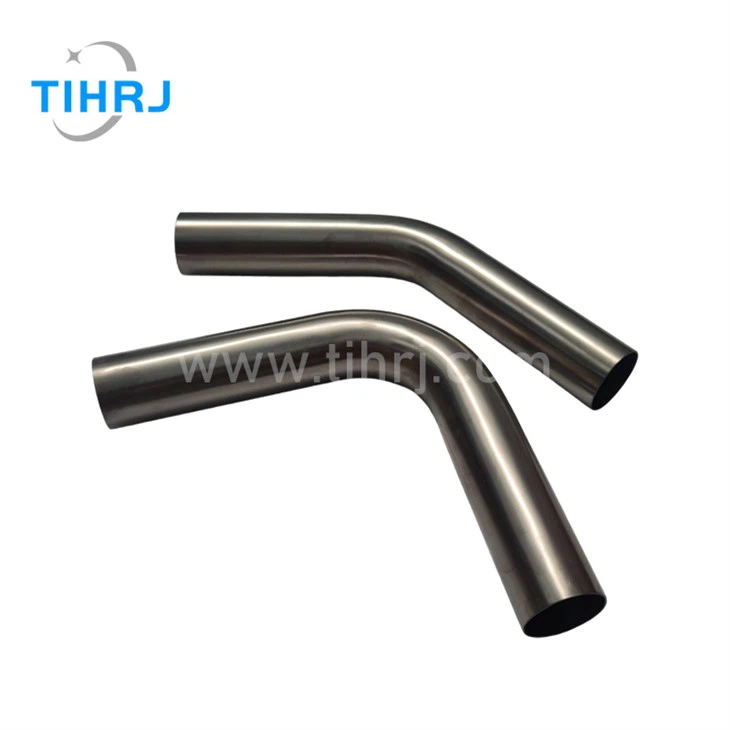
One of the most common applications of bending in engineering is in the creation of exhaust systems. As a bend supplier, we offer a range of high - quality bends, such as the 2.5″ Titanium 90 Degree Mandrel Bend, Titanium 45° Mandrel Bend, and Titanium 90° Mandrel Bend. These mandrel bends are precision - made to ensure smooth airflow and optimal performance in exhaust systems. The mandrel bending process involves using a mandrel, a solid rod inserted into the tube during bending, to prevent the tube from collapsing or wrinkling. This results in a high - quality bend with consistent wall thickness and a smooth interior surface.
In addition to exhaust systems, bending is also used in the construction of buildings, bridges, and other infrastructure. Structural steel beams are often bent to create curved or angled supports, adding aesthetic appeal and structural integrity to the design. The ability to bend materials accurately is essential in ensuring that these structures can withstand the forces they will encounter over their lifespan.
Bend in Music
Moving from the world of engineering to the realm of music, "bend" takes on a completely different meaning. In music, a bend refers to a technique used on stringed instruments, such as the guitar or violin, to change the pitch of a note. By applying pressure to the string and pushing or pulling it sideways, the player can raise or lower the pitch of the note being played.
On a guitar, for example, a bend can be used to create a bluesy or expressive sound. A guitarist might bend a note up a half - step or a whole - step to add emotion to a solo or a melody. The amount of bend and the speed at which it is executed can have a significant impact on the overall sound and feel of the music. Different types of bends, such as single bends, double bends, and pre - bends, offer a wide range of sonic possibilities for musicians.
In addition to stringed instruments, the concept of bending can also be applied to wind instruments. For instance, a saxophonist might use a technique called "lipping" to bend the pitch of a note slightly. By adjusting the tension of the lips and the pressure of the air, the saxophonist can create subtle pitch variations that add character to the music.
Bend in Everyday Life
Beyond engineering and music, "bend" has numerous meanings in everyday life. One of the most common uses of the word is to describe a physical curve or turn in a road, river, or path. We often talk about taking a bend in the road or following a bend in the river. These bends can present challenges or opportunities, depending on the context. A sharp bend in a road might require a driver to slow down and be more cautious, while a gentle bend in a river might offer a scenic view or a peaceful place to relax.
The word "bend" can also be used metaphorically to describe a change in one's attitude, behavior, or circumstances. For example, we might say that someone is willing to bend the rules in certain situations or that a person has bent under the pressure of a difficult situation. In these cases, "bend" implies a degree of flexibility or adaptability.
The Importance of Understanding Different Meanings
As a bend supplier, understanding the different meanings of "bend" is crucial for several reasons. Firstly, it allows us to communicate effectively with our customers. When a customer from the automotive industry approaches us for a bend for an exhaust system, we need to be able to understand their specific requirements and provide them with the right product. Similarly, if a musician uses the term "bend" in a conversation, we need to recognize that they are referring to a musical technique and not a physical bend in a material.
Secondly, understanding the different meanings of "bend" helps us to appreciate the versatility of the word and the diverse applications it has in various fields. This knowledge can inspire us to explore new ways of using our products or to develop innovative solutions for our customers. For example, by understanding the engineering principles behind bending and the musical concept of bending, we might be able to develop new materials or manufacturing processes that could have applications in both industries.
Conclusion
In conclusion, the word "bend" has a rich and diverse set of meanings in different fields. In engineering and manufacturing, it refers to the process of shaping materials into curved or angled forms, which is essential for the production of various components. In music, a bend is a technique used to change the pitch of a note on stringed or wind instruments, adding expressiveness and emotion to the music. In everyday life, "bend" can describe a physical curve or turn, as well as a metaphorical change in attitude or behavior.
As a bend supplier, we are committed to providing high - quality products that meet the needs of our customers in different industries. Whether you are in the automotive, construction, or music industry, we have the expertise and the products to help you achieve your goals. If you are interested in learning more about our bend products or have specific requirements for your project, we invite you to contact us for a procurement discussion. We look forward to working with you to find the perfect bend solution for your needs.
References
- Oxford English Dictionary
- Engineering textbooks on metalworking and manufacturing processes
- Music theory books on stringed and wind instrument techniques