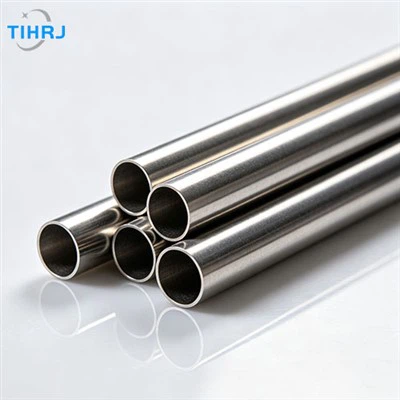
First, let's take a closer look at how titanium was made from nature to human society. Due to its extremely high chemical activity, titanium is mainly found in nature in the form of titanium dioxide and titanate, and is often symbiotic with elements such as iron, calcium, magnesium, silicon, aluminum, manganese, and rare earths. In order to extract pure titanium from these complex minerals, we need to go through a series of delicate processes. In the process of preparing titanium sponge, magnesium reduction-vacuum distillation occupies a dominant position. This method first enriches titanium minerals and then converts them to titanium tetrachloride through a chlorination process. Next, titanium tetrachloride is reduced using magnesium under the protection of argon, resulting in titanium sponge. Through vacuum distillation, magnesium and magnesium chloride can be further separated and removed, resulting in a pure titanium sponge product. Titanium sponge, as the basic material of all finished titanium products and titanium powder, its quality is very important for the performance of titanium products. In China, titanium sponge is divided into 7 grades according to standards such as chemical composition and Brinell hardness, ranging from 0A to 5. Among them, 0A grade and grade 0 titanium sponge have the highest purity, which is mainly used in high-end industrial fields and military fields. These areas require extremely high performance of materials, especially in the aerospace industry, where high-quality titanium sponge must be used for precision parts to ensure their safety and reliability. In the medical field, high-quality titanium sponge also plays an important role, such as human implants and surgical instruments, which need to meet extremely high standards for biocompatibility and corrosion resistance. Grade 1 titanium sponge is widely used in aerospace, medical and sports and leisure fields. In the aerospace sector, it is used to manufacture key parts such as engine components and fuselage structural parts for aircraft and rockets. In the medical field, grade 1 titanium sponge is used in the manufacture of medical materials and equipment such as artificial joints and surgical instruments. In the sports and leisure industry, it is used to manufacture high-performance sports equipment and outdoor equipment.
For fields with low purity requirements, such as chemical industry, salt production and metallurgy, grade 2 and grade 3 titanium sponge are mainly used. Although the purity of these titanium sponges is slightly lower, the price is more affordable and can meet the basic needs of titanium materials in these fields. Grade 4 titanium sponge is more affordable and suitable for large-scale applications in the chemical industry. Although the purity of grade 5 titanium sponge is only 98.5%, this does not mean that it has no application value. In some fields that do not require high purity, such as the construction field, grade 5 titanium sponge has become a good choice for reducing costs and increasing efficiency due to its relatively low price and sufficient performance. Through the rational application of grade 5 titanium sponge, the construction cost can be effectively reduced without affecting the quality of the building. To sum up, titanium sponge plays a vital role in the titanium industry. From high-end industrial fields to daily life applications, different grades of titanium sponge are playing their unique role and value.