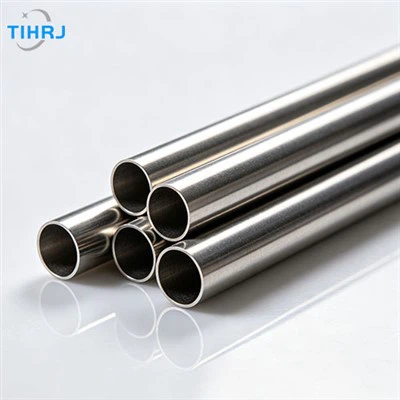
Why Titanium Bellows Are Becoming Increasingly Popular?
As industrial systems continue to evolve, the demands placed on piping and connection components are becoming more complex than ever. Today's equipment must withstand higher pressures, wider temperature ranges, aggressive media, and continuous dynamic movement-all while maintaining long-term reliability.
In this context, titanium bellows are gaining strong momentum across multiple industries, gradually shifting from a niche solution to a preferred choice in critical applications.
1. Outstanding Corrosion Resistance for Harsh Environments
One of the most compelling reasons behind the growing adoption of titanium bellows is their exceptional corrosion resistance. Titanium naturally forms a stable oxide film that protects the material from a wide range of corrosive media, including chlorides, acids, alkalis, and seawater.
Compared with conventional stainless steel bellows, titanium bellows are far less susceptible to pitting corrosion, crevice corrosion, and stress corrosion cracking. This makes them especially suitable for chemical processing, electrochemical systems, marine environments, and applications involving high-purity or aggressive fluids.
For systems where leakage or material degradation could lead to serious operational or safety risks, titanium provides a higher level of assurance.
2. Lightweight Design Supporting Modern Engineering Trends
Lightweight design has become a key consideration in many industries, from automotive and motorsports to energy equipment and precision machinery. Titanium offers a significant advantage in this regard, with a density approximately 40% lower than that of steel.
By using titanium bellows, engineers can reduce overall system weight without compromising strength or flexibility. This is particularly beneficial in applications such as:
High-performance automotive and racing exhaust systems
Dynamic piping systems requiring frequent movement compensation
Equipment sensitive to vibration and mechanical stress
Lighter components contribute to improved system efficiency, easier installation, and greater design flexibility.
3. Excellent Fatigue Performance for Dynamic Applications
Bellows are often exposed to repeated axial, lateral, and angular movements, as well as vibration and thermal cycling. Under such conditions, fatigue performance becomes a critical factor.
Titanium exhibits excellent elasticity and fatigue resistance, allowing titanium bellows to maintain stable performance over long service periods. When properly designed and manufactured, titanium bellows can deliver superior durability in high-cycle applications, reducing the risk of fatigue-related failure.
This reliability makes titanium bellows a strong choice for systems that operate continuously or under demanding dynamic loads.
4. Lower Total Cost of Ownership Over the Product Lifecycle
Although titanium bellows typically have a higher initial cost than stainless steel alternatives, many end users are increasingly evaluating costs from a lifecycle perspective rather than a unit price standpoint.
Thanks to their long service life, corrosion resistance, and reduced maintenance requirements, titanium bellows can significantly lower:
Maintenance frequency
Unplanned downtime
Replacement and repair costs
In critical systems, the cost of a single failure can far exceed the price difference between materials. From this perspective, titanium bellows often represent a more economical and reliable long-term investment.
5. Maturing Manufacturing Technologies and Improved Consistency
In the past, titanium bellows were sometimes viewed as difficult to manufacture, with concerns related to forming, welding, and quality control. However, advancements in titanium material processing and manufacturing technology have greatly improved product consistency and reliability.
With controlled forming processes, precision welding, and comprehensive inspection methods, titanium bellows can now be produced with stable dimensions, consistent mechanical properties, and reliable performance. This progress has lowered the barrier to adoption and made titanium bellows more accessible for a wider range of industrial applications.
6. Expanding Applications and Growing Market Acceptance
Today, titanium bellows are widely used in:
Chemical and electrochemical equipment
New energy and environmental systems
Semiconductor and high-purity piping
High-performance automotive and motorsports applications
Marine and offshore engineering
As successful application cases continue to accumulate, titanium bellows are no longer seen as an exotic or overly expensive option, but rather as a practical and rational material choice for demanding conditions.
Conclusion
The increasing popularity of titanium bellows is not driven by a single advantage, but by a combination of performance benefits, evolving industry requirements, and advancements in manufacturing capability.
As industries place greater emphasis on reliability, safety, and long-term operational stability, titanium bellows are proving to be a dependable solution for critical piping systems. While they may not replace stainless steel in every application, titanium bellows are clearly establishing their position where performance truly matters.