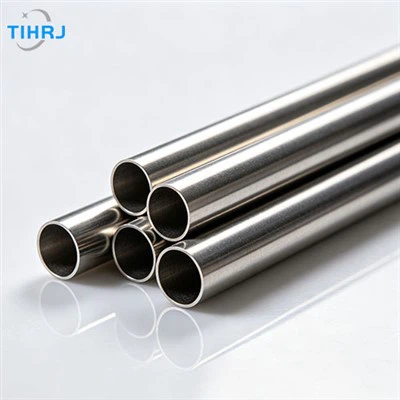
When it comes to the application of titanium alloy in the middle and tail exhaust system of automobiles, titanium alloy is widely used in high-performance cars, racing cars and high-end modifications. Today, let's talk about the advantages of titanium alloys in automobile exhaust.
1. Extreme Lightweighting
Lightweight is the core reason why titanium alloys are used in automobile exhaust. The density of titanium alloys is 4.5 g/cm³, which is about 57% of that of stainless steel. This means that to manufacture an exhaust pipe of the same volume and strength, titanium alloy can weigh 40%-50% or more than stainless steel. The exhaust system is located under the chassis and belongs to the "unsprung mass". Reducing unsprung mass significantly improves vehicle dynamics. Lightweight improves handling, the suspension responds more quickly to changes in the road, tires stick better to the ground, and cornering is more stable. Lightweight can improve acceleration and braking performance, and the vehicle will be more agile. The reduced suspension load results in a smoother ride, especially on bumpy roads.
2. Excellent High Temperature Strength
Although the exhaust temperature in the middle and tail sections is usually around 300°C - 700°C, which is lower than the 900°C+ in the first section, it is still very high. Titanium alloys (especially commonly used grades such as Ti-6Al-4V) can maintain good specific strength (strength/density ratio) at high temperatures, and are not prone to creep deformation at high temperatures. The high strength ensures that the exhaust system retains its structural integrity and shape during intense driving or track conditions, avoiding sagging or cracking due to high temperatures.
3. Excellent Corrosion Resistance
A dense, stable and self-healing oxide film (mainly TiO₂) forms on the surface of titanium alloys, which gives it excellent corrosion resistance. The oxide film can effectively resist the corrosive environment of acidic substances (such as sulfuric acid and nitric acid condensate), water vapor, salt (winter snow melting salt) contained in automobile exhaust, and its service life is far beyond that of ordinary steel, and even better than some stainless steel. This means that the exhaust pipe is less prone to rust and perforation, lasts longer and looks good.
4. Good Fatigue Strength
The exhaust system is subject to cyclic stresses caused by engine vibrations, road bumps, and thermal expansion and contraction. Titanium alloys have good fatigue resistance and are able to withstand this repeated stress action, reducing the risk of fracture due to fatigue.
5. Unique Acoustic Characteristics
The material properties of titanium alloys, such as density and modulus of elasticity, affect the transmission of exhaust sound waves. Compared to stainless steel, titanium exhaust tends to produce a crisper, higher-pitched, and more "metallic" unique exhaust sound, a sound characteristic that is favored by many performance car enthusiasts and tuners.
Why is titanium alloy mainly used in the "middle and tail sections"?
Cost considerations: Titanium alloys are inherently expensive (often several times or even more than ten times that of high-quality stainless steel) and more difficult to process (welding requires inert gas protection, such as argon). The head section is directly connected to the engine, which is subjected to temperatures up to 900°C and requires more heat-resistant and structurally complex materials (such as special stainless steels or Inconel nickel-based alloys), which are too costly and extremely demanding for welding. The temperature of the middle and tail sections is relatively low, the shape is relatively regular, and the use of titanium alloy achieves a better balance between performance and cost.
Maximum weight reduction: The middle and tail sections are longer and take up most of the length of the exhaust. Reducing this weight has the most significant effect on reducing unsprung mass.
Corrosion resistance requirements: After the temperature of the middle and tail sections is reduced, it is easier to produce condensed acidic liquids, which requires high corrosion resistance, and the advantages of titanium alloys are reflected here.
Titanium alloy is used in the middle and tail exhaust of automobiles, and the core driving force is the significant performance improvement brought by extreme lightweight, combined with excellent high-temperature strength, excellent corrosion resistance and good fatigue performance. Despite the high cost, these advantages make it ideal for high-end applications that require extreme performance, light weight, and long life, such as racing cars, supercars, and high-performance tuning. Its distinctive exhaust sound is also a factor that attracts a large number of tuning enthusiasts. If you would like to know more, please contact catherine@hiriger.com