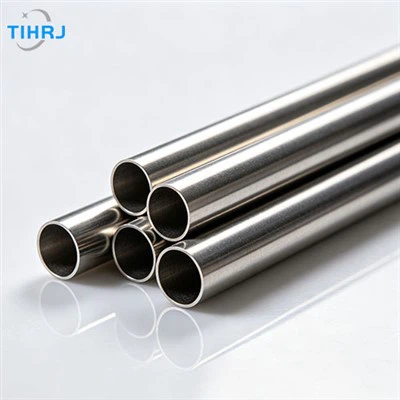
In a strict industry sense, there is no single metal that will "never rust" in all environments. Corrosion depends on the environment (saltwater, acids, humidity, temperature cycling, chemicals), the metal's purity, surface finish, microstructure, and even how the part is manufactured.
That said, some metals are extremely resistant to corrosion-so they may appear "never rust" for practical lifetimes in normal conditions. Here's how the industry typically frames the answer.
1) "Rust" is really an iron-specific term
When people say "rust," they usually mean the reddish-brown corrosion products of iron/steel (primarily iron oxides).
So "never rust" is often shorthand for "will not form red/brown oxide corrosion like steel."
2) Metals that are highly corrosion-resistant (but not invincible)
Stainless steel (often "won't rust" if properly graded and finished)
Most stainless steels are protected by a chromium-rich passive oxide layer. In many everyday environments, that oxide layer prevents significant corrosion, so it often looks like "it never rusts."
However, stainless steel can still corrode:
in chloride-rich environments (salt water),
under crevice conditions (under gaskets/rubber),
or if the passive layer is damaged (poor cleaning, weld scale, scratches).
Industry takeaway: stainless steel resists rust extremely well, but certain conditions can still cause corrosion.
Aluminum (very corrosion-resistant due to its oxide film)
Aluminum forms a protective oxide layer quickly, which makes it slow to corrode compared to many metals. Many people treat aluminum as "won't rust," and it's often true that it won't rust like steel.
But aluminum can still corrode (for example, pitting/corrosion in marine environments or in certain chemical conditions). Industry takeaway: aluminum is resistant, not immune.
Titanium (very corrosion-resistant because it passivates strongly)
Titanium forms a stable oxide layer (titanium dioxide) that gives it excellent corrosion resistance in many environments-especially compared with steel.
But again: corrosion depends on the chemistry and conditions. Titanium can corrode in specific aggressive environments, or if surface conditions are poor or contaminated. Industry takeaway: titanium resists corrosion extremely well, but "never" is too strong a claim.
Copper and some other non-ferrous metals
Copper doesn't rust in the steel sense; instead it develops a protective patina (greenish copper compounds). This often protects it and gives long service life.
Still, copper can corrode depending on atmosphere and chemicals-just differently than rust. Industry takeaway: corrosion behavior may be protective/patina-forming, but not "no corrosion."
3) The most honest industry answer
If you asked materials engineers to answer "Which metal will never rust?" they would typically reply:
No metal is truly rust-proof in every environment.
The best candidates are metals/alloys that form stable protective films (stainless steel, titanium, aluminum), because they dramatically slow corrosion.
So the "never rust" claim is usually replaced by a more technical statement like:
"very high corrosion resistance,"
"excellent passivation behavior,"
"long service life under specified conditions."
4) Why "never" is hard in the real world
Even the best corrosion-resistant metals can fail when:
chlorides (salt) penetrate and break down passive layers,
the metal experiences crevice corrosion,
coatings are damaged,
dissimilar metals create galvanic corrosion,
surface roughness/contamination prevents proper passivation,
or there is poor heat treatment/welding that changes microstructure.
Industry reality is that corrosion is often a system problem (metal + environment + design + surface + maintenance), not just a single-element choice.
Bottom line
There is no metal that will never rust everywhere.
But if your goal is "won't rust like steel" for real-world use, the industry commonly points to:
Stainless steel (with proper grade/finish),
Titanium (excellent passivation),
Aluminum (protective oxide film),
and copper/alloys (patina-protective behavior).