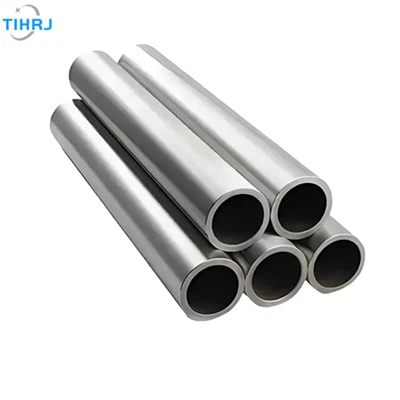
TI GR 12 (Titanium Grade 12) is a unique titanium alloy renowned in the engineering, chemical, and marine industries for its outstanding corrosion resistance, strength, and weldability. Understanding its composition, properties, and applications can help you determine if TI GR 12 is the right material for your project.
1. Chemical Composition
Main Elements: Titanium (base), with 0.8% Nickel (Ni) and 0.3% Molybdenum (Mo)
UNS Designation: R53400
ASTM Specification: ASTM B265, B338, B367, etc.
The addition of nickel and molybdenum sets Grade 12 apart from other commercially pure titanium grades, providing improved mechanical and corrosion properties.
2. Key Properties
Corrosion Resistance: Exceptional, especially in mildly reducing and highly oxidizing environments. Superior resistance to crevice corrosion and stress corrosion cracking, particularly in hot brines and chloride solutions.
Strength: Higher than commercially pure grades (like Grade 2 or 3), with mechanical properties approaching those of some titanium alloys.
Weldability: Excellent; forms strong, ductile welds without significant loss of corrosion resistance.
Workability: Good formability and machinability compared to other titanium alloys.
Service Temperature: Suitable for use at elevated temperatures (up to about 315°C / 600°F).
3. Major Applications
TI GR 12 is chosen for demanding environments where both corrosion resistance and strength are essential. Key industries and uses include:
A. Chemical Processing
Heat exchangers, piping, tanks, and reactors handling acidic or chloride-rich solutions.
Ideal for processes involving wet chlorine gas, sodium hypochlorite, sulfur dioxide, and organic acids.
B. Marine and Offshore
Components exposed to seawater, such as piping, valves, and pumps on ships, platforms, and desalination plants.
Resists crevice corrosion and pitting, even in warm, turbulent seawater.
C. Power Generation
Condenser tubing, cooling systems, and pollution-control equipment in fossil and nuclear power plants.
D. Oil & Gas
Downhole tubing, risers, and fittings exposed to brine, sour gas, or other aggressive fluids.
E. Other Applications
Automotive exhaust systems, aerospace fasteners, and architectural structures in harsh environments.
4. Comparison With Other Titanium Grades
| Property | Grade 2 | Grade 5 (Ti-6Al-4V) | Grade 12 (TI GR 12) |
|---|---|---|---|
| Alloying Elements | None | Al, V | Ni, Mo |
| Strength | Moderate | High | Moderate–High |
| Corrosion Resistance | Excellent | Good | Outstanding (especially to crevice and chloride corrosion) |
| Weldability | Excellent | Good | Excellent |
| Cost | Moderate | High | Moderate–High |
| Typical Applications | CP, general | Aerospace, high-stress | Chemical, marine, power |
5. Summary Table
| Feature | TI GR 12 Alloy Characteristic |
|---|---|
| Main Alloying Elements | 0.8% Ni, 0.3% Mo |
| Strength | Higher than Grades 2, 3, 7 |
| Corrosion Resistance | Exceptional, especially vs. chlorides |
| Weldability | Excellent |
| Typical Use | Chemical processing, marine, power |
| Standard Spec | ASTM B265, B338, B367, etc. |
Conclusion
TI GR 12 is a premium titanium alloy engineered for the toughest environments, combining high strength, excellent weldability, and exceptional resistance to corrosion-especially in chloride- and acid-rich settings.
It is a preferred material in chemical, marine, oil & gas, and power industries where reliability and longevity are critical.
Considering TI GR 12 for your next project or in need of material selection guidance? Share your requirements for expert recommendations!