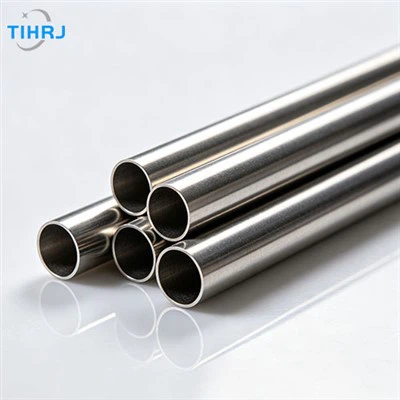
Titanium is a remarkable metal that stands out in the world of materials science and engineering. Its unique blend of properties makes it indispensable in industries ranging from aerospace to medicine. Here's what makes titanium so special:
1. Exceptional Strength-to-Weight Ratio
Lightweight: Titanium is about 45% lighter than steel, yet as strong as high-strength steels.
High Strength: It can withstand heavy loads and stresses, making it ideal for applications where both strength and weight savings are critical (e.g., aircraft and spacecraft).
2. Outstanding Corrosion Resistance
Titanium forms a stable, protective oxide layer on its surface.
Resistant to: Seawater, chlorine, acids (except hydrofluoric acid), and many industrial chemicals.
Ideal for: Marine, chemical processing, desalination, and medical environments where other metals would corrode.
3. Biocompatibility
Non-toxic and non-reactive: Titanium does not cause allergic reactions and is not rejected by the human body.
Widely used for: Medical implants (e.g., bone screws, joint replacements, dental implants), surgical tools, and prosthetics.
4. High Temperature Stability
Melting Point: 1,668°C (3,034°F), much higher than aluminum and many steels.
Maintains strength and integrity at elevated temperatures, making it perfect for jet engines, exhausts, and aerospace structures.
5. Non-Magnetic and Non-Toxic
Non-magnetic: Suitable for sensitive electronics, MRI environments, and submarine parts.
Non-toxic: Safe for medical and food-processing applications.
6. Aesthetic Appeal
Natural metallic luster: Attractive in watches, jewelry, and consumer electronics.
Can be anodized to produce vivid colors for decorative applications.
7. Applications That Leverage Titanium's Special Properties
| Industry | Application Example | Why Titanium? |
|---|---|---|
| Aerospace | Aircraft frames, turbine blades, fasteners | Weight savings, strength, heat resistance |
| Medical | Implants, surgical tools, dental posts | Biocompatibility, corrosion resistance |
| Automotive | Performance exhausts, valves, connecting rods | Strength, lightness, heat resistance |
| Marine | Ship shafts, valves, underwater equipment | Corrosion resistance |
| Sports/Leisure | Golf clubs, bicycle frames, eyeglass frames | Light weight, durability |
| Chemical | Reactors, heat exchangers, piping | Chemical resistance |
| Jewelry/Electronics | Watches, rings, phone casings | Hypoallergenic, attractive, durable |
8. Limitations
Cost: Titanium is more expensive than steel or aluminum due to extraction and processing challenges.
Machining Difficulty: Harder to machine and weld than many other metals, requiring specialized tools and techniques.
Conclusion
Titanium is special because it combines lightness, strength, corrosion resistance, and biocompatibility-properties rarely found together in any other metal.
This unique profile makes titanium the material of choice for the most demanding, high-value, and precision applications in modern industry.
Want to know if titanium is right for your application or how it compares to other metals? Ask for a tailored material comparison or more industry examples!