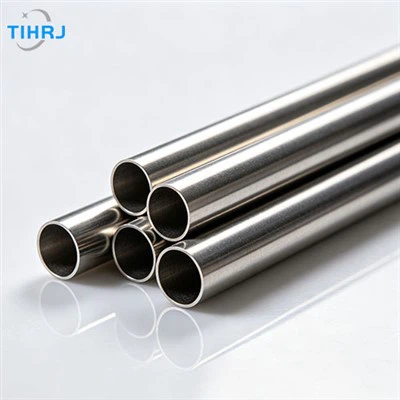
A seamless tube is a type of pipe or tube produced without any welded seam along its length. This distinguishes it from "welded tubes," which are made by rolling and welding flat material into a tube shape. Seamless tubes hold a special place in many industries for their unique properties and manufacturing process.
1. How Is a Seamless Tube Made?
Starting Material: Typically, a solid cylindrical billet of metal (such as steel, titanium, or other alloys).
Piercing: The billet is heated and pierced through the center using a mandrel or piercing tool, creating a hollow "shell."
Elongation: The hollow shell is rolled, elongated, and sometimes drawn to achieve the final diameter and wall thickness-all without any longitudinal weld seam.
Finishing: The tube may undergo further processing for precise dimensions, surface finish, or heat treatment.
2. Key Features of Seamless Tubes
| Feature | Description |
|---|---|
| No Weld Seam | Entire tube is formed without joining or welding edges. |
| Uniform Strength | Mechanical properties are consistent throughout. |
| High Pressure Resistance | Ideal for applications where pressure integrity is critical, as there's no weak seam. |
| Smooth Interior & Exterior | No local finishing is required at a weld line; excellent for fluid, gas, or chemical flow. |
3. Seamless vs. Welded Tubes
| Aspect | Seamless Tube | Welded Tube |
|---|---|---|
| Manufacturing | Billet pierced and rolled into a tube | Rolled sheet/strip, edges welded |
| Weld Line | None | Present |
| Strength | No weak points, uniform | Slightly weaker at the weld seam |
| Pressure Use | High (boilers, oil & gas, hydraulics) | Moderate to low |
| Cost | More expensive (complex process) | Less expensive |
| Common Materials | Steel, stainless steel, titanium, alloys | Metals, sometimes plastics |
| Typical Sizes | Smaller diameters/thicker walls | All sizes, including large diameters |
4. Main Applications of Seamless Tubes
Oil and Gas Industry: Drill pipes, casing, tubing, and pipelines under high pressure.
Aerospace: Hydraulic and fuel lines where integrity is critical.
Automotive: Fuel injection, brake lines.
Boilers and Heat Exchangers: Handling high temperatures and pressures.
Medical: Hypodermic needles, surgical instruments.
5. Why Choose Seamless Tubes?
Reliability: No risk of weld seam failure.
Strength and Integrity: Preferred for demanding and safety-critical operations.
Smooth Bore: Reduces resistance and wear in fluid transport.
Corrosion Resistance: Uniform material reduces failure points where corrosion could start.
Conclusion
A seamless tube is a high-performance tubing solution made directly from a solid billet-without any weld seam-giving it superior mechanical properties and integrity. It's the go-to choice for industries that demand the highest levels of safety, strength, and reliability.
Need to know if seamless tubing is the right choice for your application or industry? Share your requirements for expert insight!