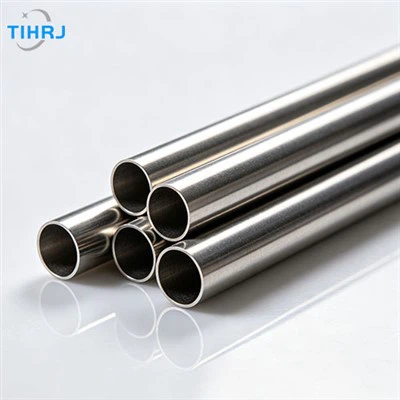
Titanium has been hailed as a "space metal", "marine metal", "modern metal" and "strategic metal". The reserves of titanium in the earth's crust are very abundant, second only to iron, aluminum, magnesium, its melting point is high (1668 °C), it is a rare light metal that is refractory, with small density, high specific strength, low thermal conductivity, good high temperature and low temperature resistance, strong corrosion resistance and other outstanding characteristics, in addition to shape memory, superconductivity and helium storage three special functions, is widely used in aerospace, marine engineering, chemical industry, petroleum, electric power, construction, biomedicine, transportation, sports, daily necessities and other fields.

Titanium properties and characteristics
|
Low density and high specific strength |
The density of titanium metal is 4.51g/cm3, which is about 50% of copper and 57% of low carbon steel, while the specific strength (tensile strength/density) is high, and the specific strength of pure titanium and TC4 alloy is 2.3 times and 3.8 times that of low carbon steel, and 1.8 times and 3 times that of stainless steel, respectively. |
|
Strong corrosion resistance |
Titanium is easy to form a dense and stable oxide film on the surface of the air, with a strong passivation tendency, very strong corrosion resistance, is one of the best anti-corrosion materials, and the oxide film still maintains its performance at a medium temperature below 315 °C. |
|
High and low temperature resistance |
Titanium alloy can be used for a long time below 500C, and can maintain good ductility and toughness at low temperatures of -196~253°C. |
|
Non-magnetic and non-toxic |
Titanium will not be magnetized in large magnetic fields, and has good compatibility with human tissues and blood. |
|
Memory function |
Titanium-nickel alloys have unidirectional, bidirectional, and omnidirectional memory effects. |
|
Superconductivity function |
Niobium-titanium alloys exhibit zero resistance and complete diamagnetism below critical temperatures. |
|
Hydrogen storage function |
Titanium-iron alloys have the property of hydrogen absorption, which safely stores a large amount of hydrogen and releases it in a certain environment. |