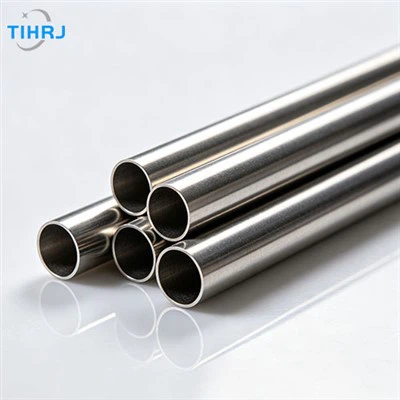
1. Characteristics And Benefits Of Titanium
Lightweight: Titanium has a significantly lower density (4.51 g/cm³) than stainless steel (7.9 g/cm³), reducing exhaust system weight by up to 30%-50% and improving fuel efficiency and power response.
High temperature resistance: Titanium is stable below 600°C and is suitable for high-temperature areas (e.g. exhaust manifolds), while high-temperature alloys such as Ti-6Al-4V can withstand even higher temperatures.
Corrosion resistance: The titanium surface oxide film (TiO₂) effectively resists acid exhaust gases (such as sulfuric acid, nitric acid) and salt spray corrosion, prolonging the life of components.
Strength and fatigue performance: The specific strength (strength/density ratio) of titanium alloy is excellent, and the anti-vibration fatigue characteristics are suitable for complex road conditions.
2. Specific Application Scenarios
High-performance models, such as the Porsche 911 GT3 and Ferrari F12tdf, adopt a titanium exhaust system to reduce weight and improve sound quality.
Welding of key components:
Exhaust manifold: Welding needs to cope with the instantaneous high temperature above 800°C, and the titanium welding wire ensures that the weld does not fail under cyclic thermal stress.
Middle and tail exhaust pipes: Titanium reduces resonance noise, and the surface retains the original metal color without additional plating.
Mufflers and catalytic converter housings: Titanium's corrosion resistance reduces the risk of contamination of the internal catalytic medium.
Tuning market: Titanium exhaust kits (e.g. Akrapovič) are commonly found in motorcycles and supercars, reducing weight by up to 5-10 kg and increasing the horsepower-to-weight ratio.
3. Welding Process Challenges
Inert gas protection: TIG welding with high-purity argon (99.999%) is required, and the welding torch needs to be equipped with a drag cover to extend the protective area to prevent high-temperature oxidation (hydrogen absorption and oxygen embrittlement of titanium above 300°C).
Weld cleanliness: Before welding, acetone should be used to remove oil stains to avoid porosity or cracks caused by impurities.
Process parameter control: low heat input welding to reduce the heat affected zone, such as the use of pulse TIG welding, the current is 80-150A, and the pulse frequency is 1-2Hz.
4. Economic And Market Considerations
Cost factor: The price of titanium welding wire is about 5-8 times that of stainless steel, and the processing cost is high, resulting in an increase of 2-3 times the cost of the vehicle exhaust system, which is mainly limited to the high-end market.
Life-cycle costs: In the long run, the long life and maintenance-free nature of titanium components may offset the initial costs, especially in harsh environments such as high-salinity areas.
5. Adaptation Of Environmental Protection And Regulations
Emission compliance: Titanium does not affect catalytic conversion efficiency, and lightweight indirectly reduces CO₂ emissions, complying with stringent regulations such as Euro 7.
Recyclability: The recycling rate of titanium waste can reach more than 95%, supporting sustainable manufacturing.
6. Future Trends
Composite applications: New technologies, such as titanium-ceramic composite coatings, may further reduce costs.
3D printing technology: selective laser melting (SLM) technology or realize the integrated molding of titanium exhaust parts with complex structures to reduce the need for welds.
Although subject to cost and process complexity, with the increase of technological progress and environmental protection pressure, its application range is expected to gradually expand to mid-to-high-end models, promoting the development of lightweight and high-efficiency automobiles.