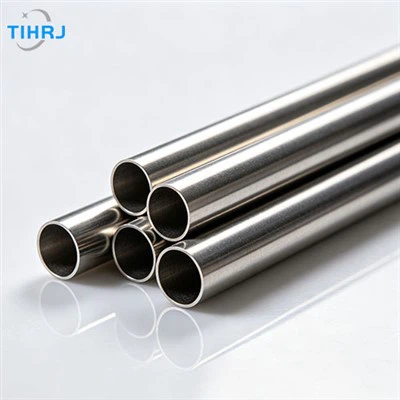
Titanium is often considered an expensive metal, especially compared with common steels and aluminum-but whether it's "very expensive" depends on the form you buy (raw sponge/ingot vs. finished sheet, bar, or parts), the grade (commercially pure titanium vs. Ti-6Al-4V and other alloys), and the volume and manufacturing difficulty involved.
1) Why titanium tends to cost more
Higher raw-material and processing cost
Titanium does not usually come to market as a simple, easy-to-melt metal like iron. It is extracted from titanium-bearing ores and then processed through energy-intensive steps (commonly involving reduction and conversion). In many cases, the supply chain also involves intermediate products that add cost before you ever reach "titanium metal" for manufacturing.
It's harder to manufacture into finished products
Titanium is not only expensive at the "material" level-it can be more expensive to machine and form:
Machining can be difficult: titanium can be tough on tooling, can gall or seize during cutting, and often requires specific tooling and cutting parameters.
Heat management and welding complexity: titanium welds require careful control to avoid contamination (oxygen and nitrogen pickup) and to maintain mechanical properties.
Dimensional accuracy and surface finishing can add cost because you often need higher-quality processes.
Industry-grade quality and traceability
For many applications (aerospace, medical, high-performance engineering), titanium components require strict standards, heat-treatment control, NDT (non-destructive testing), and traceability. That quality assurance increases cost.
2) "Expensive" in practice: the relative comparisons
Compared with carbon steel, titanium is typically much more expensive.
Compared with aluminum, titanium is also often more expensive, though the gap varies by product form and market cycle.
Compared with some specialty metals (certain high-end nickel alloys), titanium can be expensive but is not always the most expensive option-especially when you consider weight savings and performance.
3) Where titanium becomes "worth it"
Even though titanium costs more, it can be chosen because it delivers value where performance matters:
High strength-to-weight ratio: titanium can be much lighter than steel while providing comparable or better strength in many designs.
Corrosion resistance: titanium forms a stable oxide layer, so it performs extremely well in seawater and many chemical environments.
Heat resistance and fatigue performance (depending on grade and heat treatment): important for engines, aerospace, and high-stress applications.
Biocompatibility: medical uses (implants, dental parts) rely on grades and surface treatments that can justify the cost.
In other words, titanium may be "expensive," but it can reduce total system cost by enabling lighter designs, longer service life, or eliminating corrosion-related maintenance.
4) Costs vary a lot by form and grade
Titanium is not one single uniform price. Major cost drivers include:
Grade (e.g., commercially pure titanium vs. Ti-6Al-4V)
Condition (annealed, heat-treated, wrought vs. cast)
Product form (sponge, ingot, bar, plate, sheet, tubing)
Size and thickness
Quantity (small custom runs cost more per unit)
Market supply/demand (titanium is affected by global industrial cycles)
5) A practical industry conclusion
Yes-titanium is generally a very expensive metal relative to common construction materials, mainly due to extraction/processing complexity and the cost of manufacturing into final parts. But in high-performance and safety-critical markets, titanium's properties can make it a cost-effective choice when you look at the whole system (weight, durability, and lifecycle cost), not just the purchase price.