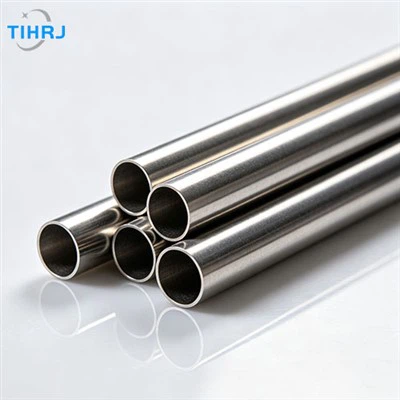
At present, more and more modification enthusiasts choose to use titanium tail pipes instead of stainless steel tail pipes, today let's discuss the installation method of titanium tail pipes. Preparations that need to be done before installing titanium tailpipes include matching the shape and preparing the relevant installation tools.
1. Choose A Titanium Exhaust Tips Of The Right Size
Confirm the compatibility of your car's titanium tailpipe with the exhaust pipe caliber, such as the air inlet diameter of 51mm corresponding to the air outlet of 76mm. It is recommended to refer to the vehicle manual or consult the merchant to avoid poor exhaust or loose installation due to size deviations. Titanium alloy materials need to pay attention to surface treatment to ensure high temperature resistance and corrosion resistance.
2. Tools & Safety Preparation
Before installation, you need to prepare a wrench, screwdriver (screw fixture) or angle grinder, welding equipment, and anti-rust paint. The vehicle must be parked on a flat ground, turned off to cool down until there is no high temperature in the exhaust pipe, and tighten the handbrake to ensure safe operation.
3. Detailed Explanation Of The Installation Steps
A. Screw-on installation (universal simplified method)
Remove the original tailpipe: Use a wrench to loosen the tightening screws of the original tailpipe, and spray loosening agent to assist in disassembly if the rust is severe. Clean the oil stains and rust at the end of the exhaust pipe to ensure that the titanium tailpipe fit surface is free of impurities.
Socketing and positioning: Insert the titanium tailpipe into the exhaust pipe and adjust it to a horizontal position (avoid tilting or touching the ground). Some models need to cut the tail end of the original exhaust pipe to adapt the angle (if the original pipe is exhausted downwards and needs to be changed to a straight outlet), the cut needs to be polished and sprayed with anti-rust paint after cutting.
Fastening and fixing: Use a wrench to gradually tighten the screws with the tail pipe (to avoid deformation caused by excessive force), and the screws need to be tightened diagonally alternately to balance the force. Check whether the gap between the tailpipe and the exhaust pipe is uniform to ensure that there is no shaking.
B. Welded fixed installation (permanent reinforcement method)
Cutting and trimming: Cut the excess part of the tail end of the original exhaust pipe, use an angle grinder to polish the cut until it is flat, and spray the high-temperature anti-rust paint to protect the section.
Welding fixation: align the titanium tail pipe with the cut, and adjust the position after spot welding is preliminarily fixed (make sure it is symmetrical with the body and the exhaust port is parallel to the ground). Argon arc welding or oxygen welding is used to complete the whole welding to avoid air leakage caused by false welding. After welding, remove the weld slag and check the sealing of the weld.
4. Inspection & Debugging After Installation
Start test: Start the engine and observe whether the tail throat resonates or makes abnormal noises due to airflow. If there is abnormal vibration, the screws need to be retightened or repaired and reinforced.
Exhaust patency verification: Use your hands to sense whether the exhaust airflow is uniform, and listen for changes in exhaust sound. If the sound is dull or the power is reduced, the exhaust may be blocked due to improper installation, and the tail throat angle or inner diameter needs to be adjusted to match.
5. Daily Use & Maintenance
Regular inspection: Check every 5,000 km for loose screws/clamps (vehicle vibration can easily cause fastener failure) and cracks in welds.
Cleaning and maintenance:
Titanium alloy has strong corrosion resistance, but it is recommended to wipe the surface regularly with a neutral detergent to avoid carbon deposits affecting the luster. Do not use strong acid solvents or wire balls to prevent damage to the coating.
6. Different Types Of Titanium Tail Pipes
Decorative titanium tailpipe: only changes the appearance, has no significant impact on power and fuel consumption.
Sporty titanium tailpipe: It may produce a low exhaust sound due to the internal structure design, but if the exhaust resistance is increased, the low-speed torque will be slightly reduced, so you need to choose a straight-through design.
Through the above steps to standardize the operation, the titanium tail pipe can take into account both aesthetics and functionality. Titanium's lightweight and durability advantages are particularly significant in long-term use, but precise installation is a key prerequisite for its performance. If complex exhaust pipe modifications are involved (such as angle adjustment), it is recommended to have them constructed by a professional modification shop to avoid risks. If you want to choose a titanium tailpipe for your car, please contact catherine@hiriger.com.