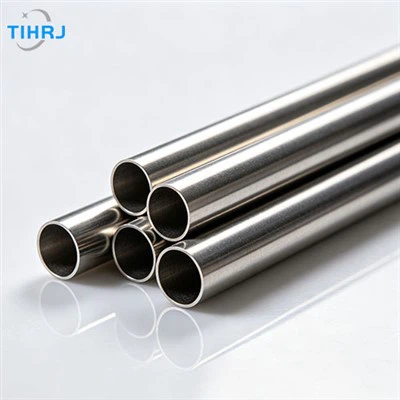
Exhaust corrugated hose, often referred to as exhaust flexible pipe, is a seemingly simple but crucial core component in the exhaust system of modern automobiles and industrial equipment. Its fundamental role can be vividly summarized as the "flexible joint" in the entire rigid exhaust system. The engine, which is the power heart of the vehicle, produces violent vibrations when it is running. This vibration is due to the reciprocating motion of the piston, the uneven combustion explosion, and the inertial force of the crankshaft rotation, which is an innate physical property of the engine. At the same time, the body or frame carrying the engine will also produce varying degrees of deformation and shaking due to uneven road surfaces, steering, braking and other actions during driving. If the inlet end of the exhaust system (exhaust manifold) and the outlet (muffler, catalytic converter and subsequent pipes) are all rigidly connected, then the stress of relative movement between the engine and the body will have nowhere to be released, and all the action will be concentrated on the exhaust system itself. The direct consequences of this are cracked solder joints, loose bolts on connecting flanges, twisted and deformed pipes, and even damage to the delicate and fragile exhaust manifold or turbocharger housing connected to them. Exhaust corrugated hoses are born to solve this fundamental contradiction. It is typically precision coiled from extremely thin stainless steel strips (such as AISI 321, 304, etc.) to form a series of continuous, ring-like corrugated structures. This unique geometry gives it flexibility in one or more directions, i.e., the ability to compensate. It acts as a flexible buffer that effectively absorbs and compensates for the relative displacement and vibration between the engine and the body, isolating destructive mechanical stresses within its deformable range, thereby ensuring the reliability and durability of the entire exhaust system connection. Therefore, its primary and core role is vibration compensation and stress relief, which are the key links to maintain the harmonious coexistence of the engine and exhaust system.
The "flexibility" of exhaust bellows is not a single dimension, but is reflected in multiple directions to cope with the complex and changeable mechanical environment in vehicle operation. Specifically, its compensation ability is mainly divided into three aspects: axial compensation, lateral compensation and angular compensation. Axial compensation refers to the ability of a hose to be compressed or stretched in the direction of its pipe centerline. When the vehicle accelerates or brakes urgently, the engine will move forward and backward in the cabin, and the corrugated hose absorbs this longitudinal displacement like a spring through its own expansion and contraction. Lateral compensation refers to the offset ability of the hose perpendicular to the centerline. This is especially important when the vehicle is cornering, when one side wheel runs over an obstacle, or when the body is torsionally deformed, it allows a certain lateral misalignment between the inlet and outlet of the exhaust system without excessive bending torque on the pipe wall. Angular compensation means that the two ends of the connecting hose can produce a certain angle change around a fulcrum. This compensation is critical when the engine rolls due to torque response or sinks due to aging support pads. In practical applications, these three compensation modes often do not occur in isolation, but appear simultaneously in the form of compounds. For example, when a vehicle is driving on rough roads, the displacement of the engine is three-dimensional and integrated, and a high-performance bellows hose must be able to cope with the combined stresses from different directions at the same time. In addition, this multi-dimensional compensation capability greatly simplifies the installation process of the exhaust system. In the manufacturing and assembly process, there are inevitable tolerances in parts, and by introducing a section of corrugated hose, these installation errors can be cleverly "digested", reducing assembly difficulty and improving production efficiency and consistency. Therefore, corrugated hoses are the perfect embodiment of the philosophy of "overcoming rigidity with softness" in modern precision mechanical design, and are the crystallization of engineering wisdom to cope with complex dynamic working conditions.
In addition to dealing with mechanical vibration and displacement, exhaust corrugated hoses also play the role of thermal management experts. The engine exhaust temperature is extremely high, reaching hundreds of degrees Celsius at idle, and can even approach the thousand-degree mark when operating under high load. This high temperature causes the entire exhaust system, from the head near the engine to the muffler at the end, to undergo a violent thermal expansion and contraction process. Metal materials expand linearly when heated, and a multi-meter-long exhaust system can increase its length by more than ten millimeters from the cold state to full operating temperature. If both ends of the system are rigidly fixed, this enormous thermal stress will have nowhere to be released, and the result will be deformation, failure of connections, or damage to components. Due to the elasticity of its corrugated structure, the corrugated hose can effectively absorb this part of the axial thrust generated by thermal expansion, providing space for "hot breathing" for the whole system, and ensuring dimensional stability from cold start to full-working operation. At the same time, the high temperature conditions put forward extremely strict requirements for the material and sealing performance of the corrugated hose itself. This is not just about "heat resistance", but also about fatigue strength, corrosion resistance and air tightness at high temperatures. The exhaust gas contains water vapor, acidic substances and various corrosive chemical components, which are very easy to form condensate acid under the condition of alternating hot and cold, causing serious corrosion to ordinary steel. Therefore, high-quality exhaust corrugated hoses are made of high-grade austenitic stainless steel, which has excellent resistance to high-temperature oxidation and chemical corrosion. The welding process of the bellows (usually plasma or laser welding) must ensure that it can maintain a very high degree of tightness under long-term high-temperature vibrations, preventing toxic and harmful exhaust gases from leaking into the atmosphere or entering the cabin, endangering the safety of drivers and passengers and environmental pollution. Therefore, corrugated hoses are the guardians of stable, safe and long-term operation of the exhaust system in high-temperature environments.
The performance of exhaust corrugated hose directly depends on the level of material science and structural design. The material is the foundation, and the current mainstream uses 300 series austenitic stainless steels, among which AISI 321 (Titanium Stabilized Austenitic Stainless Steel) is considered the first choice for high-end applications due to its superior resistance to intergranular corrosion and long-lasting high-temperature strength. The addition of titanium can effectively inhibit the precipitation of chromium carbide at grain boundaries, thus avoiding the risk of intergranular corrosion and cracking caused by "chromium-depleted" after long-term operation in the sensitive temperature range (450-850°C). AISI 304 stainless steel is also widely used in relatively low operating temperatures due to its good comprehensive performance and cost advantages. In terms of structural design, corrugated hoses are usually not a separate component, but exist in the form of "flexible joints". To protect their thin-walled (usually only 0.2-0.4mm) bellows from external mechanical impacts, stone splashes, as well as internal airflow scouring and carbon deposits, the vast majority of exhaust bellows are protected by double-layer mesh sleeves or armored steel wires. One or two layers of mesh sleeve woven from stainless steel wire, tightly wrapped around the outside of the bellows, provide strong radial and axial protection without overly limiting its flexible compensation capabilities. In addition, in order to meet different installation space, compensation amount, and pressure bearing needs, the waveform (such as U-shape, Ω-shaped), wavelength, wave height, and number of layers (single or multi-layer) of the bellows can be customized. Multi-layer bellows can withstand higher pressure and fatigue life. The joints at both ends of the entire assembly are also in various forms, including flanges, sockets, ball hinges, etc., to adapt to different connection needs. It can be said that each section of high-performance exhaust corrugated hose is the product of the close combination of materials, mechanics and manufacturing technology, which is the fundamental guarantee for its excellent performance and long-term durability.
Although exhaust corrugated hoses are most commonly found in the exhaust system of passenger cars, their application value and influence extend far beyond that. In the broader industrial field, it plays an irreplaceable role. In the field of commercial vehicles, especially heavy-duty trucks and buses, which have more engine power, more intense vibrations, more significant frame deformations, more stringent requirements for flexible connections in the exhaust system, and large-size, high-performance corrugated hoses are standard. In the shipbuilding industry, the exhaust system of the main and auxiliary engines also faces the problems of vibration and displacement caused by hull deformation and wave impact, and marine corrugated hoses must have higher corrosion resistance (for marine salt spray environment) and reliability. The size and compensation of exhaust pipes in industrial power generation, gas turbines and large boilers can reach astonishing levels, and these giant corrugated compensators can compensate for the displacement of tens or even hundreds of millimeters caused by thermal expansion, and are one of the core components to ensure the safe operation of these critical power facilities. In addition, in special vehicles, construction machinery, rail transit and other fields, the application of exhaust corrugated hoses is everywhere. From the perspective of system value, its existence not only protects the exhaust system itself, but also indirectly improves the NVH (noise, vibration and smoothness) performance of the vehicle. A securely connected, stress-free exhaust system reduces resonance and noise caused by vibration transmission to the body, improving driving comfort. At the same time, it protects expensive catalytic converters and post-treatment devices such as particle traps (DPFs), avoids fragmentation of ceramic carriers due to mechanical stress, and ensures exhaust gas purification efficiency, which is essential for meeting increasingly stringent environmental regulations. In summary, although the exhaust corrugated hose is small, it is a key link in connecting the source of power with environmental protection, mechanical reliability and driving comfort.