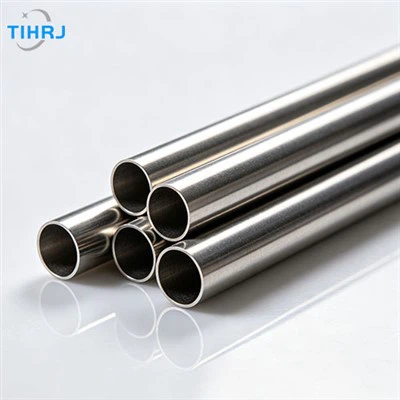
In the field of automobile modification, titanium products have now become the mainstream, titanium is not only corrosion-resistant but also can make a variety of beautiful colors, let me talk about the characteristics and advantages of titanium.
1. Titanium can be made into many colors, such as titanium gray, black, imitation gold, coffee, blue, purple and so on. Sintered blue is very common in titanium exhaust systems.
2. Titanium has good adhesion and very good adhesion to other materials, so titanium can be used as a bottom film material for film materials with poor adhesion. Titanium can also be used as a material for making film resistors or film capacitors.
3. Titanium has strong adsorption of active gases (such as CO, CO2, N2, O2 and water vapor above 650 °C), and the fresh Ti film evaporated on the mercury wall forms a surface with high adsorption capacity, with excellent gas absorption performance, and can chemically react with almost all gases except inert gases. This property makes Ti widely used as an getter in ultra-high vacuum pumping systems, such as titanium sublimation pumps, sputtering ion pumps, etc.
4. Corrosion resistance, titanium is a very reactive metal, its equilibrium potential is very low, and the thermodynamic corrosion tendency in the medium is large. But in fact, titanium is very stable in many media, such as titanium is corrosion-resistant in oxidizing, neutral and weakly reducing media. This is because titanium and oxygen have a great affinity, and in the air or oxygen-containing medium, a dense, adhesive and inert oxide film is formed on the titanium surface, which protects the titanium matrix from corrosion. Even due to mechanical wear, it heals or regenerates quickly. This indicates that titanium is a metal with a strong tendency to passivate. The oxide film of titanium with a medium temperature below 315 °C always maintains this characteristic, and titanium has a metallic luster and ductility. The density is 4.51 g/cm³. Melting point 1660±10 °c. Boiling point 3287 °c. Valencies +2, +3, and +4. The ionization energy is 6.82 electron volts. The main characteristics of titanium are low density, high mechanical strength, and easy processing. The plasticity of titanium is mainly dependent on purity. The purer the titanium, the more plastic it is. It has good corrosion resistance and is not affected by the atmosphere and seawater. At room temperature, it will not be corroded by hydrochloric acid below 7%, sulfuric acid below 5%, nitric acid, aqua regia or dilute alkali solution. Only hydrofluoric acid, concentrated hydrochloric acid, concentrated sulfuric acid, etc. can act on it.
5. In the human body, it can resist the corrosive effects of secretions and is non-toxic, and is suitable for any sterilization method. Therefore, it is widely used in the manufacture of medical devices, artificial hip joints, knee joints, shoulder joints, flank joints, skulls, active heart valves, and bone fixation clips. When the new muscle fiber ring is wrapped around these "titanium bones", these titanium bones begin to maintain the normal activities of the human body, titanium is a non-magnetic metal, will not be magnetized in a large magnetic field, non-toxic and has good compatibility with human tissues and blood, so it is used by the medical community.
6. The new titanium alloy can be used for a long time at temperatures of 600°C or higher. The strength of low-temperature titanium alloys represented by titanium alloys TA7 (Ti-5Al-2.5Sn), TC4 (Ti-6Al-4V) and Ti-2.5Zr-1.5Mo increases with the decrease of temperature, but the plasticity does not change much. It maintains good ductility and toughness at a low temperature of -196-253°C, avoids metal cold brittleness, and is an ideal material for cryogenic containers, storage tanks and other equipment.
7. After being subjected to mechanical vibration and electrical vibration, titanium metal has the longest vibration attenuation time compared with steel and copper metals. This performance of titanium can be used as a tuning fork, a vibrating element for a medical ultrasonic grinder, and a vibrating film for high-end audio speakers.
8. This property of titanium indicates that its yield ratio (tensile strength/yield strength) is high, indicating the poor plastic deformation of the titanium metal material during forming. Due to the large ratio of the yield limit of titanium to the modulus of elasticity, the rebound capacity of titanium during molding is large.
9. Good heat exchange performance.Although the thermal conductivity of titanium metal is lower than that of carbon steel and copper, the wall thickness can be greatly reduced due to the excellent corrosion resistance of titanium, and the heat exchange mode between the surface and steam is droplet condensation, which reduces the heat group, and the titanium surface does not scale and can also reduce the thermal resistance, so that the heat exchange performance of titanium is significantly improved.
10. Low modulus of elasticity.The modulus of elasticity of titanium is 106.4 GPa at room temperature, which is 57% of that of steel.
If you want to know more about titanium, please contact catherine@hiriger.com.