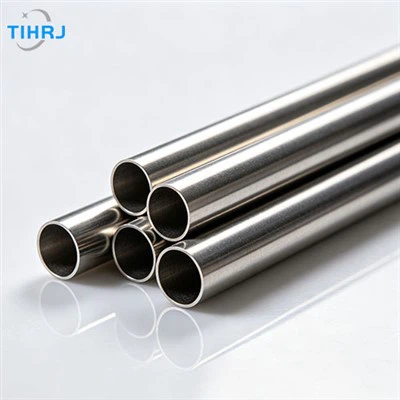
Titanium welding wire, as a special welding material, possesses excellent mechanical properties and corrosion resistance due to its titanium content, making it widely used in various industrial fields.
Applications of Titanium Welding Wire
Laser Filler Wire Welding: Titanium welding wire exhibits good weld formation and microstructure properties in laser filler wire welding, especially in the welding of TC4 titanium alloy plates, achieving high-quality welds.
Underwater Welding: Laser filler wire welding technology for TC4 titanium alloys has been successfully applied in the underwater field. High-quality underwater welds can be obtained after optimizing welding parameters.
Aerospace: Titanium welding wire is used for the repair welding of turbine disks and blades in aero-jet engines, as well as the welding of casings.
Chemical Industry: Due to its corrosion resistance, titanium welding wire is used in the chemical, pharmaceutical, and paper industries for equipment maintenance and the manufacture of new equipment.
Medical Industry: Titanium alloys have become one of the most successful metallic materials in the field of biomedical engineering, used in the production of orthopedic implants, dental prostheses, and cardiovascular devices.
Performance of Titanium Welding Wire
Mechanical Properties: By selecting suitable titanium welding wire and optimizing the welding process, the overall performance of the welded joint can be effectively improved.
Corrosion Resistance: Alloying elements in titanium welding wire, such as Ni, Co, Cr, Pd, and Ru, significantly improve the corrosion resistance of the weld.
Microstructure Control: Laser filler wire welding technology can effectively control the distribution of acicular martensite in the weld center and the grain size of the heat-affected zone.
Welding Process of Titanium Welding Wire
Welding Parameter Optimization: By adjusting parameters such as welding speed, wire feed speed, and laser power, a well-formed, continuous, and stable weld can be obtained.
Pretreatment Methods: These include beveling, cleaning the bevel and welding wire, preheating, and chemical treatment. These steps help improve weld quality.
Welding Wire Preparation Methods: For example, the preparation method of Cu-Ag-Cr welding wire for titanium-pipeline steel welding can reduce transition layer welding stress and improve weld strength and toughness.
Challenges in Titanium Welding Wire Welding
Implant Nodule Problem:This problem can be effectively solved by analyzing the causes of nozzle nodule formation in steel using titanium welding wire and implementing improvement measures.
Castability Study:By controlling process parameters, the castability of molten steel can be significantly improved, thereby enhancing the quality of the welding wire.
The selection of titanium welding wire and the welding process have a decisive impact on the quality of the final weld joint. Through continuous research and process optimization, titanium welding wire plays a vital role in enhancing the competitiveness of industrial products and meeting the demands for high-quality welding.